Latest Tweets

MSU_WeedsMSU_Weeds: Chase the sprayer with the planter. http://t.co/oGo319Gf22 #mscrops
4 weeks ago
MStateCornMStateCorn: Thanks for the feature! RT @Pursuitof300: What’s YOUR key to high #corn yields in 2013? http://t.co/gSgWaGOyFb #mscrops
4 weeks ago

Latest Poll

When choosing a variety, what is the first thing you look for?

View Results

Loading ... Loading ...

Events Calendar

May  2013
Mon Tue Wed Thu Fri Sat Sun
   
  1 2 3 4 5
6 7 8 9 10 11 12
13 14 15 16 17 18 19
20 21 22 23 24 25 26
27 28 29 30 31  

Wheat Leaf Topics and Physiological Leaf Spotting

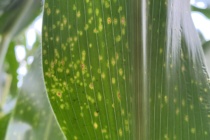
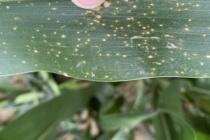
Oftentimes dealing with foliar wheat diseases can be a confusing topic. More often than not, physiological leaf spotting, or genetic leaf spot, can be observed in most wheat fields after flowering stages. However, the leaf spot symptoms are occasionally misdiagnosed as early leaf rust symptoms. But, rarely have I observed a disease epidemic in a situation where the specific “flecking” symptoms are regularly observed. . . . → Read More: Wheat Leaf Topics and Physiological Leaf Spotting

Cotton Replant Costs

Very little cotton has been planted so far this year given the seemingly weekly rainfall.  What little cotton has been planted has struggled due to cool temperatures, water saturation, etc.  In some cases, fields are not going to emerge to an adequate stand and re-planting will be necessary.  Changes have been enacted with respect to re-plant . . . → Read More: Cotton Replant Costs

Transform WG Insecticide from Dow Recieves Label for Cotton

Earlier this week Transform WG insecticide from Dow received a full Section 3 label for use in cotton. . . . → Read More: Transform WG Insecticide from Dow Recieves Label for Cotton

Mississippi Rice Progress – May 7, 2013

I feel like Bill Murray in the movie “Groundhog Day”. Speaking of “Groundhog Day”, the Groundhog definitely missed this year’s prediction. At any rate, we are where we are and all we can do is manage what we are being dealt. According to USDA, for the week ending May 5, we had planted 14% of the . . . → Read More: Mississippi Rice Progress – May 7, 2013

How to Determine Growth Stages of Young Corn or Sorghum

V4 Growth Stage

Vegetative growth stages of corn or sorghum are determined by counting the number of fully emerged leaves with leaf collars present. This can be used to anticipate growth and determine appropriate timing of many management decisions, including herbicide application, sidedress fertilizer, etc…. . . . → Read More: How to Determine Growth Stages of Young Corn or Sorghum

Wheat Disease Update: May 4, 2013

Scattered reports of wheat diseases have been made over the past two weeks. Limited leaf rust, stripe rust, and Septoria leaf blotch can be observed in some wheat fields. In addition, in some situations bacterial leaf streak can be readily observed on flag leaves in some limited situations. In some cases, bacterial leaf streak and Septoria leaf blotch can appear similar to one another. In most cases, Septoria leaf blotch can be observed in the lower canopy and likely will not move up the plant to the flag leaf. However, bacterial leaf streak can be more readily observed on flag leaves in some fields. . . . → Read More: Wheat Disease Update: May 4, 2013

Stink Bug Numbers Increasing in Heading Wheat

I am starting to get numerous calls about stink bugs in heading wheat. It is not uncommon to find stink bugs in wheat after head emergence.  However, it takes extremely high numbers to cause economic damage to heading wheat. With this in mind, seeing high numbers of stink bugs while walking a wheat field may seem alarming, . . . → Read More: Stink Bug Numbers Increasing in Heading Wheat

Brown Stink Bugs Showing Up In Small Corn

Stink bugs damage small corn by feeding through the whorl or side of the stem hitting the growing point which either causes “dead heart” or severely stunts the plant. Severely stunted plants may not die but essentially become a weed. In many cases, corn that has been fed on without hitting the growing point will recover. Even if the growing point is not hit, in some situations where stink bugs feed through the stem you will see irregular growth. . . . → Read More: Brown Stink Bugs Showing Up In Small Corn

Are Early, Vegetative Fungicide Applications Beneficial for Enhanced Corn Production? (Part II: Impact of Fungicide on Greensnap)

During 2012 fungicide application trials were conducted at a field site west of Greenwood, MS. Following a major wind event that occurred early in June, excessive greensnap was observed in plots that had received V6 foliar fungicide applications. Plots were assessed to determine if fungicides could consistently alleviate the occurrence of greensnap compared to untreated plots. . . . → Read More: Are Early, Vegetative Fungicide Applications Beneficial for Enhanced Corn Production? (Part II: Impact of Fungicide on Greensnap)

Are Early, Vegetative Fungicide Applications Beneficial for Enhanced Corn Production? (Part I: Yield)

Oftentimes, deciding whether or not to make a fungicide application to corn in vegetative growth stages is not based on disease. Rarely are foliar diseases an issue in vegetative growth stages (save for extremely rare situations). More often than not, the decision to apply a fungicide at a vegetative timing is based on the theory of “plant health”, or physiological enhancements to the plant as a result of the fungicide that have been difficult to replicate in all situations. . . . → Read More: Are Early, Vegetative Fungicide Applications Beneficial for Enhanced Corn Production? (Part I: Yield)