

Related Articles
- Calcium and Magnesium For Mississippi Crops 1
- March 11 Precision Agriculture Workshop 0
- Ground Speed Affects Spray Droplet Deposition 0
Latest Tweets
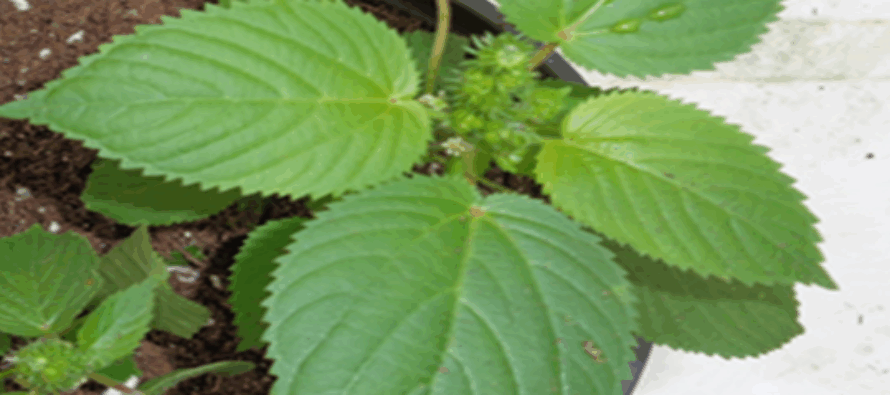
Hophornbeam copperleaf
Weed Flora of Mississippi
Family: Euphorbiaceae (spurge)
Genus: Acalypha Species: ostryifolia
History: Native of North and Central America.
Life Cycle: Summer annual
Special Characteristics: Hophornbeam copperleaf has an extended emergence pattern from June through September that can help it avoid typical herbicide applications in corn and soybean. Hophornbeam copperleaf is a member of the spurge family and is unique in that it does not exude milky sap when broken like other members of this family. The weed can often be confused with prickly sida. However, hophornbeam copperleaf can be identified by its sharply and finely serrated leaf margins that can be compared to a saw blade. Male and female flowers are in separate spikes with the staminate males on short axillary spikes and the pistillate females in elongated, interrupted, terminal spikes.
Roots: Fibrous roots originating from a taproot.
Stem: The stems are upright, branching, purplish-green with vertical striations, short, recurved hairs and stalked glands.
Leaves: leaves are alternate, petiolate, simple and ovate, with serrate or dentate margins, a cordate base and slight pubescence, and grow to 3.9 in in length.
Flower: The male flowers have four ovate greenish sepals often tinged red and no petals. The female flowers are also petal-less but have three styles which subdivide into white hairs which give the inflorescence a furry appearance. Female flowers usually grow three times longer than males, creating an advantage for seed dispersal.
Seeds / Fruit: It can produce 12,510 seeds per plant. These seeds can germinate over a wide range of conditions and do not require scarification (mechanical injury that improves water uptake and germination).
Interference: Hophombeam copperleaf has been reported to be a weedy pest of com, soybean, peanut, and watermelon. Hophombeam copperleaf can occur at densities that have the potential to reduce yields and influence harvest efficiency in peanut grown in Georgia. Conversely, hophornbeam emerges later in the soybean growing season and is less likely to reduce yields. No-till row crop production along with glyphosate-resistant crops has likely provided an environment for this weed to thrive. The reduction in cultivation and applications of soil-applied residual herbicides and the species’ tolerance to glyphosate has allowed this weed to become more widespread in the midsouthern and midwestern United States. The species also has some tolerance to acetolactate synthase-inhibiting herbicides often used POST in cotton, com, and soybean.





Let me tell You a sad story ! There are no comments yet, but You can be first one to comment this article.
Write a comment