
Hemp Dogbane

Related Articles
- Calcium and Magnesium For Mississippi Crops 1
- March 11 Precision Agriculture Workshop 0
- Ground Speed Affects Spray Droplet Deposition 1
Latest Tweets
Hemp Dogbane
Weed Flora of Mississippi
Prepared by
Taghi Bararpour
Family: Apocynaceae (dogbanes)
Genus: Apocynum Species: cannabinum
History: Hemp dogbane is native to North America.
Life Cycle: Perennial
Special Characteristics: Hemp dogbane is a persistent perennial broadleaf weed in row crops, pastures, or hay fields, often growing in patches. Every part of the plant, mainly the stem, excretes a white/milky sap when broken in two. Seeds are dispersed over long distances by wind. The hemp dogbane, seed is not persistent and survives < 6 months in the soil. The rootstocks are persistent in the soil because in one growing season, they will grow a 6 feet in depth and spread up to 10 feet.
Roots: Taproot
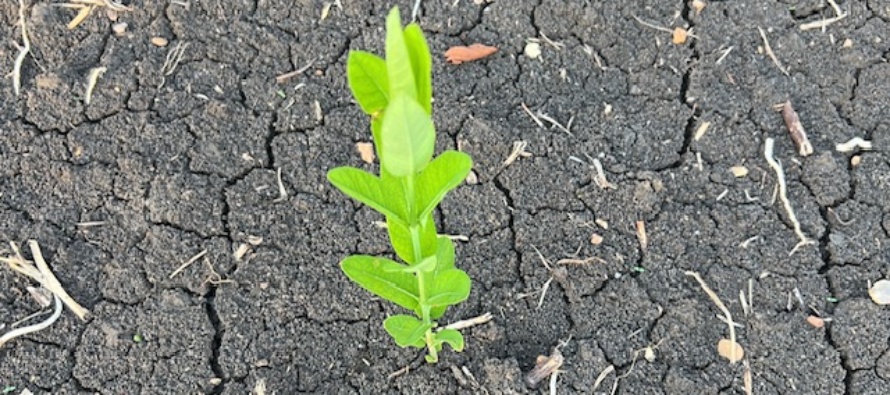
Stem: The stems are initially green but as they mature, they develop a red tint. Stems are often three feet tall.
Leaves: Leaves are two to six inches long, opposite, and smooth-edged.
Flower: Hemp dogbane flowers are small, bell-shaped, greenish-white, and arranged in dense clusters.
Seeds / Fruit: The plant develops slender, scythe-shaped seed pods (seed pods are in pairs) which contain thin, flat seeds with a tuft of hairs. It produces from 800-12,000 seeds per plant. Each plant usually has 10 to 60 seed pods. Each pod contains between 80-200 small, elongated seeds.
Interference: Hemp dogbane can be a problem in corn, grain sorghum, small grain, forages, and soybean. The waxy cuticles found on the leaf surface affect the uptake of systemic herbicides. It is very competitive. It has been shown to reduce corn yields 8 to 10% and soybean yields up to 40%.





Let me tell You a sad story ! There are no comments yet, but You can be first one to comment this article.
Write a comment