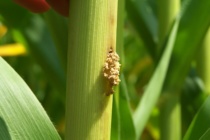
Southwestern Corn Borer Traps – July 10, 2021

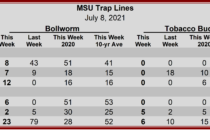
Bollworm moth catches in pheromone traps were similar or lower than last week, and continue to be lower than long-term average catches. However isolated traps sometimes catch large numbers of moths, so while the overall state should not have a
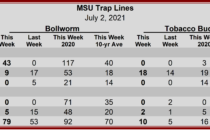
Bollworm and tobacco budworm moth catches continued to be average to below average this week in all locations. However, as corn matures past the point where it is attractive to bollworms, more of these moths will begin laying their eggs
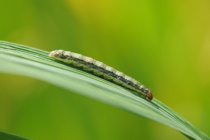
We have had numerous calls over the last week or two about poor control of fall armyworm with pyrethroids. They started in the southern part of the state and have rapidly expanded north. The assumption has been that we are
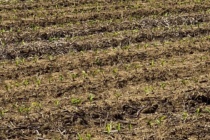
The best business managers have long-term, pro-active strategies to achieve their goals. Soil carbon (C) may not appear on the top, or even near the top of pressing concerns at this point in the season for growers. But this crop
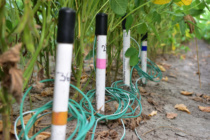
Irrometer Watermark Series: Irrigation Triggers http://extension.msstate.edu/publications/irrometer-watermark-series-irrigation-triggers Introduction An irrigation trigger is the point at which an irrigation cycle starts. Starting too wet wastes water and energy, while starting too dry reduces yield. In this publication, we give guidance on how
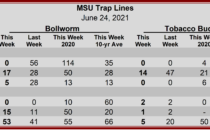
Bollworm moth catches were up slightly from last week in the Delta region but down in the Hills region. Overall, both bollworm and tobacco budworm moth catches were below average for the week.
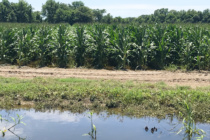
The recent extraordinary rainfall and flooding has generated substantial concern about nitrogen (N) loss in corn. This year’s event is very unique because it occurred much later in the season than we normally experience. Therefore, we will discuss how this timing affects estimating losses and associated nutrient management.
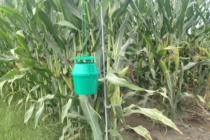
Corn borer trap numbers were variable and fairly low throughout the state this week.
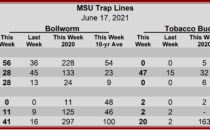
Bollworm and tobacco budworm moth catches were both up slightly during the last week at most locations. Densities are much lower than last year at this time. Compared to long-term averages, bollworm catches are low in the Delta region and
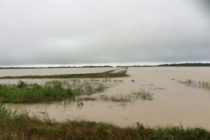
All photos courtesy of Tucker Miller Flooding is challenging Mississippi families, homes, and farms again, hence, this should be a review for many readers. The first Mississippi Crop Situation post about flooded soils was published in May 2011. There is
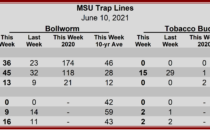
Pheromone trap catches for bollworm moths in Mississippi were steady to slightly higher this week while tobacco budworm trap catches remained low. Overall the trap catches were at or below historical averages for this time of year.
Southwestern corn borer numbers have been very low (0-2 per trap) across the state to date. We are not reporting the table of trap counts for each county this week, but will start posting county numbers next week. One trap
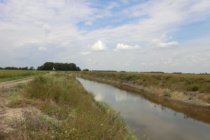
Photos courtesy of Dr. Mary L. Tagert The third part of Avoid, Control, and Trap agricultural environmental stewardship practices for nutrients and sediment is trapping them, literally keeping them on the land, reducing excess inputs to water bodies. Best Management
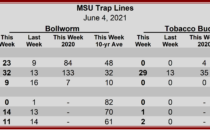
Whitney Crow and I have placed pheromone traps for bollworm (corn earworm) and tobacco budworm in several Mississippi counties again this year and I will be reporting the catches weekly throughout the rest of the growing season. Coahoma county only
As the Mississippi corn crop approaches tassel, crop health and weather may greatly affect crop response to various management inputs, including nitrogen fertilizer or other products. This article will discuss factors that may affect your strategy and improve your response.
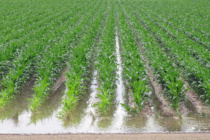
Moisture sensors have shown we can generally do much better timing irrigation needs. The initial irrigation of corn offers considerable opportunity to improve efficiency which can also enhance yields. Regardless of whether you use sensors, we explain methods to help you make irrigation decisions and make more corn.
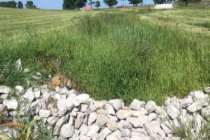
The greatest challenges for agricultural water management are getting water on fields, and then getting water off fields in the warm humid mid-South. Exiting water contains dissolved nutrients and sediments that may pose issues. Controlling the nutrient (or sediment) movement
We studied using ‘programmed decisions’ in a long-ago business management class to streamline responses: if this happens, then do X, Y, and Z. Of course, nothing ever happens according to plan. Planning reduces problems down the road however, we cannot
The ACT, a standardized test used by colleges for admission decisions, covers English, mathematics, reading, and scientific reasoning. These categories may be unfamiliar if you are a little older as they were revised in 1989. Another ACT concept uses Best
Irrometer Watermark Series: Installation Procedures http://extension.msstate.edu/publications/irrometer-watermark-series-installation-procedures Publication Number: P3540 This publication series provides information and recommendations pertaining to the Irrometer Watermark 200SS, a granular matrix sensor commonly used in Mississippi for scheduling irrigation. Future publications will discuss other types of soil
Title: Practical steps to improve on-farm soil and nutrient stewardship Location: Webinar Link out: Click here Description: Join Dr. Beth Baker and Dr. Larry Oldham with the Mississippi State University Extension Service, along with Mr. Parker Frew from Delta F.A.R.M.
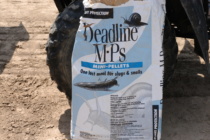
With cool wet weather this spring, we have received quite a few calls about slugs and slug damage in emerged crops. I suspect this will increase in more areas as planting continues and plants begin to emerge in areas where

© 2023 Copyright Mississippi Crops. All Rights reserved.