
Optimizing your Tassel Shot and Corn Nitrogen Management

Related Articles
- 2010 Soybean And Corn Variety Trial Data 3
- Fertilizing Cotton with Poultry Litter 5
- Spring Nitrogen Fertility Suggestions for Wheat 0
Latest Tweets
Mississippi’s corn crop is already tasseling or quickly approaching, which is the beginning of the important reproductive stages. This year’s weather has been exceptionally dry and completely opposite of last year until recently, so how might this affect corn nitrogen management? Additionally, a large storm system has recently brought plentiful rainfall to most of the region. Therefore, how do weather and corn growth affect management practices you intend to complete?
Corn sensitivity to stress, photosynthetic capability and plant response to other limitations certainly varies with growth stage. Early reproductive growth stages, particularly during and shortly following pollination are the most sensitive to limitations, and as plants mature, they generally become much more resilient. Corn is very sensitive to stress at early reproductive stages because plants are swapping energy allocation from vegetative to reproductive organs, and small, immature reproductive organs have poor ability to draw energy reserves from vegetation at this time. This makes developing kernels very dependent on current photosynthetic rate to supply energy needed to optimize development and ultimately productivity. Does this mean tassel stage is the best timing for various inputs intending to improve plant health? Not necessarily, if your corn crop is currently very healthy and there are no impending limitations threatening, you shouldn’t expect the crop to be any more responsive to management timing at tassel stage. For instance, our research has consistently shown automatic fungicide application at tassel stage is rarely going to improve corn yield or plant health in the absence of foliar disease.
The biggest wildcard this year is how abnormally dry weather this spring may affect nitrogen relations for the corn crop. Rainy weather and extended soil saturation often produce considerable denitrification losses which normally reduce nitrogen efficiency for southern growers. In other words, it takes more nitrogen to produce a bushel of corn yield. Conversely, we would expect much higher nitrogen efficiency than normal given dry weather, if surface applied urea did not suffer considerable volatility loss. Of course, most areas are receiving plentiful rain this week, but cumulative soil-water status is more important to nitrogen relations. Accordingly, if soils do not remain saturated for extended time, we would expect to realize better nitrogen efficiency than normal this year. Thus, we could moderate nitrogen plans or rate considering efficiency should be higher than normal.
The most popular subject regarding this topic is timing of top-dress or supplemental nitrogen. Our early-planted corn is well ahead of normal and a lot is already tasseling. Furthermore, abundant rainfall currently has many fields saturated and not conducive to sound fertility practices. So should you be concerned about missing the opportunity for best response, or do you have some leeway for fertilizer timing and effective use of your “tassel shot?” The answer depends on the condition of your crop and what has transpired until this point. These two scenarios generally address most situations we are likely to encounter:
-

Nitrogen use is about 65% of seasonal needs at tassel, so it is unusual to be deficient at this time.
The most typical scenario is when your corn is currently healthy and dark green, and your “tassel shot” is part of a planned program to improve seasonal nitrogen efficiency. If this is the case, then sustaining nitrogen nutrition through grain fill is not dependent upon pre-tassel timing. This is reasonable because corn nitrogen uptake at tassel is only about 65% of seasonal demand, so unless catastrophic loss has occurred, you should currently have plentiful nitrogen available. This scenario is generally going to be far more typical for Mississippi growers, especially if you implement a sound, split-application strategy, as we recommend. In fact, this application is simply another extension of the split-application strategy, which minimizes exposure of nitrogen fertilizer before the crop needs it. Your primary goal with this strategy is to maintain ample nitrogen to fully support grain fill until maturity, when nitrogen supply is most likely to falter. In other words, in this scenario, it is not necessary to sweat whether you apply supplemental nitrogen at V12, V15, tassel or even brown silk. The most important factor in this case is to apply nitrogen fertilizer when weather conditions are favorable for incorporation. Accordingly, the soil surface must be dry enough for subsequent rainfall to be absorbed and incorporate fertilizer without severe runoff or loss. Our primary goal should be to top-dress urea just prior to rainfall, which effectively incorporates fertilizer. Center pivot irrigation will also serve this purpose well, but our predominant furrow irrigation systems do not work as well since water only flows in the furrow. Consequently, granules located elsewhere are not readily incorporated and are vulnerable to volatility loss. Thus, we strongly recommend using a urease inhibitor containing the active ingredient NBPT to minimize volatility of top-dressed urea. Also, we have little ability to regulate the amount of water applied with furrow irrigation, so soils are often wetter than desired, which stunts plant growth and increases nutrient loss in the long run.
- When a corn field is nitrogen deficient prior to tassel, then it is extremely important to correct the limitation prior to tassel in order to minimize corn yield loss. Such catastrophic nitrogen deficiency is usually due to rain preventing fertilizer application, or extensive losses resulting from prolonged soil saturation (as occurred in 2025 in some areas). If you applied a considerable amount of nitrogen prior to a lengthy wet period, losses will be higher, compared to later-timed applications which reduce exposure. Nitrogen deficiency is relatively simple to identify by observing yellowing of lower leaves beginning at the leaf tip and progressing down the midrib in a “V” shaped pattern as shown below. Since the fertilizer will not be available to the crop until it is incorporated, it is best to apply fertilizer prior to forecast rainfall or over-head irrigation, and well prior to the critical pollination time. However, realize additional nitrogen will not overcome stunting caused by soil saturation or soil compaction.

The characteristic inverted V yellowing pattern from nitrogen deficiency in corn. Symptoms will be more prevalent on lower leaves.
Another frequent question posed is whether physical disturbance from rainfall, irrigation, top-dressing fertilizer, or any management practice might hamper corn pollination. The short answer is usually no, as corn possesses numerous traits which enhance their ability to successfully pollinate. These traits include:
- A huge abundance of pollen (about 5,000 pollen grains per ovule or potential kernel).
- Pollen shed and silk receptiveness lasting seven days or longer.
- Tassels primarily shed pollen when conditions are favorable (not when tassels are wet or temps are hot).
- Silks possess sticky hairs which help capture and hold pollen grains.
- Silks grow during pollination, so burn from fertilizer granules is quickly replaced.
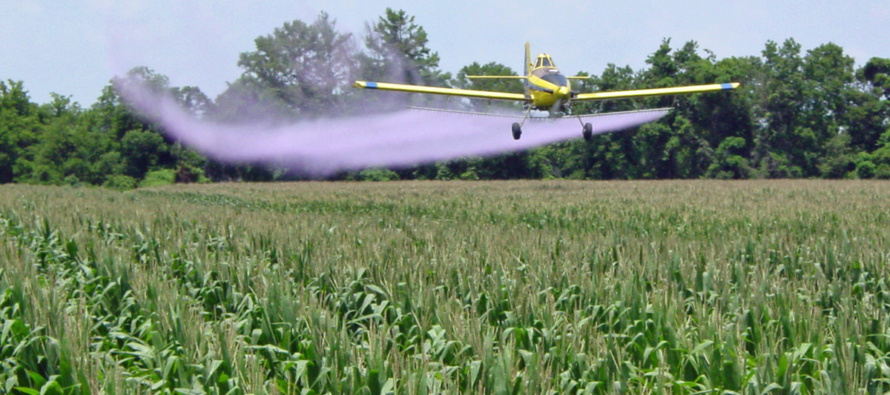
However, ear development and pollination problems have been linked to pesticides applied during late vegetative stages or just prior to tassel, particularly V10 to V14 growth stages (about one to two weeks prior to tassel). This phenomenon has been referred to as arrested ear development, blunt ear syndrome, or beer can syndrome. These issues have been commonly documented when fungicides were applied on corn shortly before tassel. However, the cause of damage has generally been correlated with spray additives, including surfactants or crop oil, and herbicides included in the spray solution. These products may damage the ear and systemically stunt or arrest development, particularly ear length. This damage typically results in short, blunt, and poorly pollinated ears.




Let me tell You a sad story ! There are no comments yet, but You can be first one to comment this article.
Write a comment