
Cover Crop Species Selection

Related Articles
- 2010 Soybean And Corn Variety Trial Data 3
- Flag The Technology 0
- Rice Seeding Rate Calculator and Chart 0
Latest Tweets
Many plant species can serve as cover crops grown during the off-season from the life cycle of primary crops. In the Midsouth region of the United States, primary crops grow during the summer, so cover crops are cool season species planted in the fall and grown through the winter and early spring. These cool season species can be classified into cereal grains, cool season legumes and brassicas or other non-legume broadleaves.
The three groups of cover crop species each possess distinctive characteristics which affect their purpose and the benefits they can produce in an agricultural cover crop system. Cover crops can improve organic matter, stabilize soil, reduce erosion, improve nutrient relations, minimize soil compaction, and address other issues. However, a seed blend of diverse plant types is needed to achieve optimum results. It is important to prioritize your goals and understand the benefits and limitations associated of various species, and their relationship with primary crops.

Cereals possess a fibrous root system which can stabilize the soil far better than other options.
Cereal grain species are characterized by fibrous, lateral roots, quick emergence and vigorous fall growth. Thus, cereals provide excellent soil stabilization and protection from erosion. Because of this important purpose, cereals are a primary component of most cover crop systems or blend of species. Cereals produce upright stem growth in the spring and substantial biomass to recycle organic matter back into the soil. However, their stem growth has a high carbon content which is slow to decompose and can produce various complications with establishment and growth of primary crops, including corn, soybean, and cotton.
Legumes are unique because they can biologically fix nitrogen into the soil through a symbiotic relationship with rhizobia bacteria in root nodules when plants are healthy and properly inoculated. Accordingly, legumes are a key component of most cover crop blends of species. This supplemental nitrogen benefits plant growth, including companion and subsequent crops, and helps improve nitrogen relations during the transition from cover crops to the succeeding primary crop. For instance, the decomposition of plant organic matter produced by cover crops uses nitrogen to facilitate breakdown. This immobilization process can reduce nitrogen availability for the following crop because the decomposing plant residue from cover crops needs more nitrogen than is present. Nitrogen produced by cover crop legumes can aid this process and help avoid a nitrogen deficit. This can benefit any crop planted immediately following a cover crop, including soybeans, which can eventually fix nitrogen. However, legumes produce modest fall growth, compared to cereals, so blends are required to attain sufficient cover to stabilize soil and protect from erosion during the fall and early winter. Research shows legume species adaptation can vary tremendously depending on tolerance to wet soils, maturity, and susceptibility to winterkill. Legumes are also considerably more vulnerable to winterkill than cereal grains.

Crimson clover and other legumes sensitive to wet soils may struggle to grow or even survive in our rainy winter climate. Thus, selection of adapted legumes is very important.

Brassica’s typically produce abundant vegetation and tubers which may relieve soil compaction.
Brassica cover crops are often grown because they can produce an underground bulb or tuber on their tap root which can relieve soil compaction. They usually produce vigorous fall leaf growth and may produce chemical compounds which inhibit growth of other plant and weed species. However, brassicas are very susceptible to winterkill from freezing temperatures. Although this attribute may help save herbicide expense, it can expose soil during the late winter and spring, when soils are very vulnerable to water erosion. Accordingly, Brassicas normally serve a complimentary role in cover crop blends of species or address specialty purposes.
Cereal Cover Crop Species
 Cereal Rye is an annual small grain and popular cover crop because it grows very tall and produces more biomass than other cereal crops. Cereal rye usually grows four to six feet tall if grown to heading in the spring. Cereal rye foliage is naturally a dull, light shade of green, compared to other cereals which are bright green. Accordingly, this muted tint should not be confused with nutrient deficiency. Cereal rye is the most winterhardy and drought tolerant of the cereal species. Early varieties of cereal rye, such as Elbon, may produce more fall growth and initiate stem elongation earlier in the spring compared to other cereal species. Cereal rye can become a major weed problem if allowed to produce seed in fields where wheat or oats are grown in the future.
 Wheat is an annual small grain which is readily available, adapted and relatively inexpensive. Wheat growth in the fall growth may be slightly less than other cereals, but its growth in late winter, prior to initiation of stem elongation, is normally comparable to other cereal species. Therefore, wheat is a viable option, especially if you intend to terminate cover crop growth prior to stem elongation, which typically occurs from late February to mid-March depending upon latitude and seasonal weather. Wheat also offers more opportunities for controlling weeds using herbicides, compared to other small grains. Wheat will normally grow 2 to 3 feet tall, if grown to heading. Wheat exhibits intermediate winterhardiness compared to rye and oats, which is plenty adequate for winter survival in Mississippi.
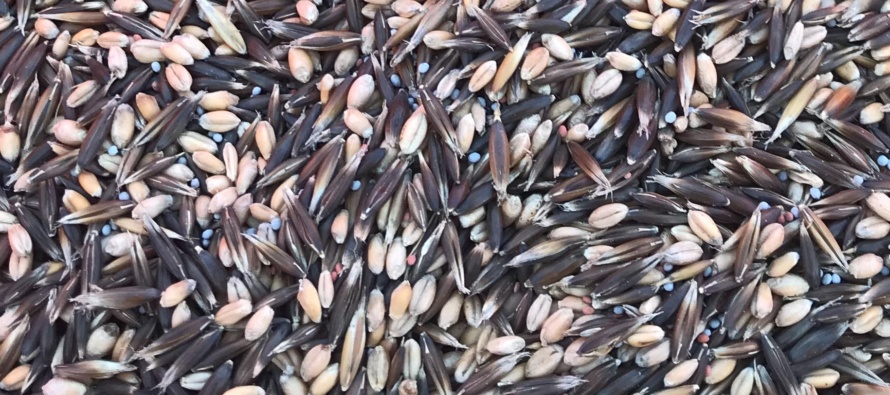
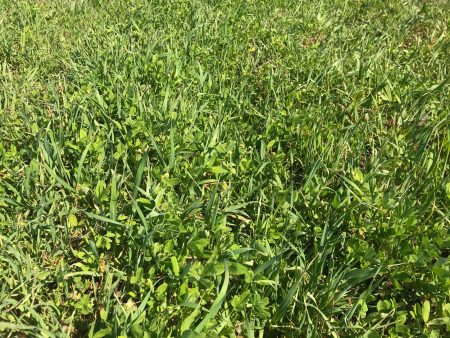 Oats, including Black oats and common oats, are annual small grains well suited for cover crop use. Oats generally develop slightly wider leaves and more prostate growth during the winter compared to other cereals. Thus, oats may slightly improve canopy coverage of the soil surface compared to other cereals. Oats are normally a little taller than wheat, and grow 2.5 to 4 feet tall, if grown to heading. Oats are adapted and planted in the fall in the Midsouth, like other winter cereal species. However, oats are the least hardy of the cereal species and may be prone to winterkill, especially when top-sown.
 Triticale is a plant species developed as a cross between cereal rye and wheat. Therefore, it develops characteristics falling between those typical of these common small grains. Triticale is taller than most wheat varieties and should attain more biomass production and grow 3 to 4 feet tall if grown to heading. Triticale winterhardiness is very good, which is better than wheat and only slightly less than cereal rye.
Legume Cover Crop Species

Crimson clover can struggle to survive in wet soils, such as in these furrows.
Crimson clover is a common species used widely in the United States as a cover crop. The variety Dixie is a standard representative of this species. Crimson clover is an early maturing legume cover crop which enhances its compatibility with primary summer crops. However, it is intolerant of saturated soils, which may hamper its growth and survivability. Accordingly, it is best suited for sandy-textured or exceptionally well drained soils in the rainy Midsouth.
 Hairy vetch is a vine producing, early legume capable of considerable growth and nitrogen fixation. The variety Patagonia is a standard and more winter-hardy representative of this species. Like Crimson clover, Hairy vetch is intolerant of saturated soils, so it is best suited for sandy-textured, well drained soils. If grown into the spring, Hairy vetch produces long, sprawling vines that can create significant problems with planting equipment and impede performance. These extensive vines are likely to become entangled in common row cleaning wheels and other planter parts.
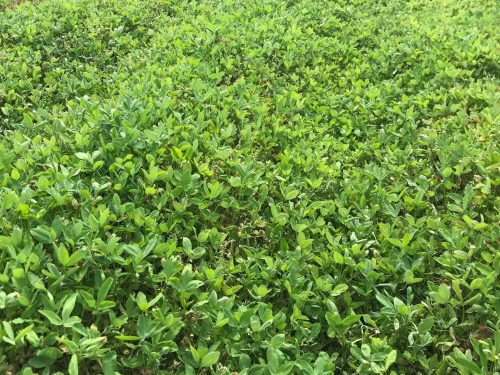 Berseem clover is a Southern-adapted annual clover that has consistently produced in our field studies. The variety Frosty is a standard representative of this species. Unlike many legume species, berseem thrives in moist, saturated soils. However, it has shallow roots and may struggle when planted early when soils are dry, during droughty conditions, or on sandy soils. Berseem is a little slower to initiate rapid spring growth than early legume species, like Crimson and Persian clover.
 Persian clover is a Southern-adapted, early maturing annual clover that has historically received little consideration as a cover crop, particularly in other regions. The varieties Enhance and Mihi are standard representatives of this species. Unlike many legume species, Persian also thrives growing in moist, saturated soils and produces vigorous early spring growth, making it a prime legume cover crop candidate in Mississippi.

Balansa clover is another annual clover that thrives growing in moist, saturated soils and a relative newcomer as a potential legume cover crop. The varieties Fixation and Viper are standard representatives of this species. Balansa offers better winterhardiness than other legumes in our studies. Balansa initiates spring growth a little later than Persian clover and may be less consistent than other species when grown in agricultural fields.




Let me tell You a sad story ! There are no comments yet, but You can be first one to comment this article.
Write a comment