
Breaking News
- No posts where found
Italian Ryegrass Identification Guide

By Dalton Whitt, Graduate Research Assistant
Related Articles
Latest Tweets
Italian ryegrass has been one of the most troublesome weeds in Mississippi for nearly 20 years. Many populations across the state are resistant to ALS herbicides, glyphosate, and ACCase herbicides such as diclofop and clethodim. Additionally, there have been some localized reports of failure to control this species with multiple applications of paraquat. Successful identification of the weed at early growth stages will allow for more timely and successful herbicide treatments.
- Latin name: Lolium perenne ssp. multiflorum (Lam.) Husnot
- Family: Poaceae (Grass)
- Life cycle: winter annual, occasionally perennial or biennial
- Emergence: when daytime temperatures are consistently < 90 F and soil moisture is adequate for seed germination
Identifying Characteristics
- Emerges as a thin, vertical, spindly grass
- Reaches approximately 4 to 5 inches in height and begins to tiller, producing multiple leaves from plant’s base
- Long, slender, clasping auricles with a fringed, translucent ligule at collar region
- Grows both vertically and horizontally as plant matures, appearing as a short, bushy clump with a glossy, dark-green appearance
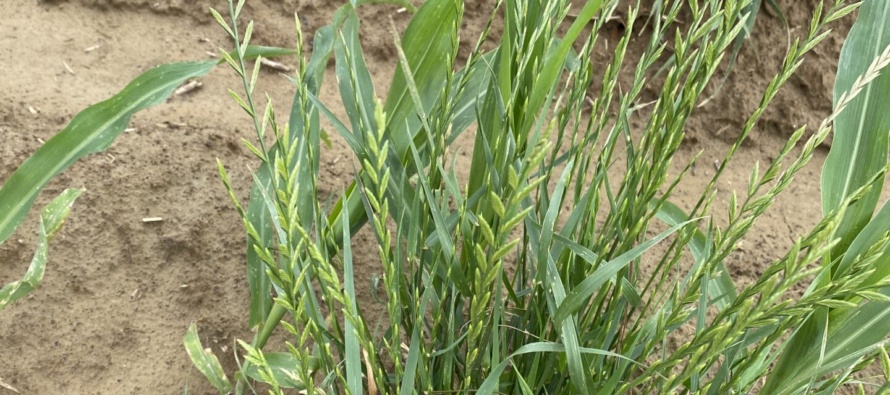
- Inflorescences (flowers) are often flat with long spikes (seedheads) that contain 5 to 30 spikelets and emerge from middle to end of stems.

Diagram showing the collar region and auricles found on Italian ryegrass plants. Credit: Weeds of the South. Bryson & DeFelice.

Italian ryegrass in reproductive growth stage.

Italian ryegrass seedlings. Credit: Dr. Jason Bond

By Dalton Whitt, Graduate Research Assistant
Write a comment
No Comments
View comments



Let me tell You a sad story ! There are no comments yet, but You can be first one to comment this article.
Write a comment