
Virginia Pepperweed Identification Guide

Related Articles
Latest Tweets
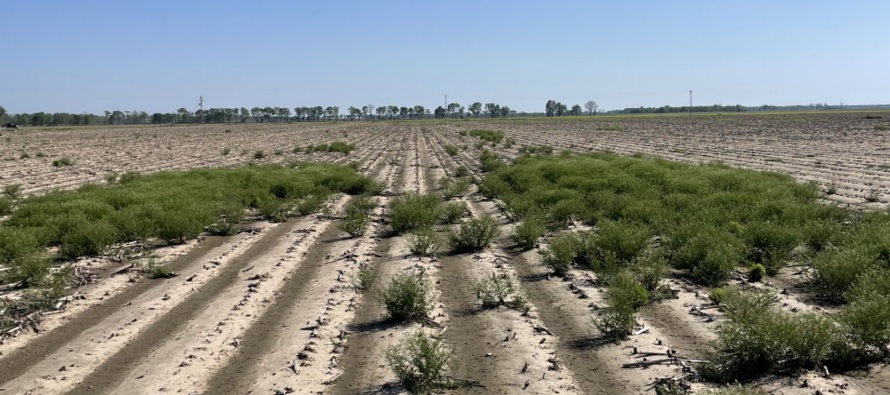
Virginia pepperweed is a winter annual broadleaf weed that has become increasingly problematic in Mississippi row crop production systems. This species can emerge in both fall and spring, allowing dense populations to form before planting. While no confirmed herbicide-resistant populations of Virginia pepperweed exist in Mississippi, the weed can be extremely difficult to control once established. Additionally, the weed has the capacity to produce many seeds, which may complicate management decisions in subsequent growing seasons. Recognizing Virginia pepperweed during early growth stages is important for selecting appropriate herbicide treatments and preventing established populations from interfering with planting operations.
- Latin name: Lepidium virginicum (L.)
- Family: Brassicaceae (Crucifers)
- Life cycle: Winter annual or sometimes short-lived summer annual
- Emergence: Peak germination occurs when daytime high temperatures are < 85 F and nighttime low temperatures are > 55 F and soil moisture is non-limiting
Identifying Characteristics
- Seedlings initially develop a basal rosette of leaves that remain close to the soil surface.
- Rosette leaves become deeply lobed or toothed as plants mature but do not typically persist once flowering stems are produced.
- Mature plants develop erect, highly branched stems that can reach approximately 3 feet in height.
- Leaves on flowering stems are generally linear to lanceolate in shape and alternately arranged along the stem, with toothed or occasionally smooth margins.
- Produces numerous small, white flowers with four petals arranged in elongated clusters (racemes) near the end of branches.
- Seedpods are small, flattened, and generally round to oval in shape. Each pod contains 1 to2 reddish-brown seeds.

Virginia pepperweed in vegetative growth stage (basal rosette).

Virginia pepperweed transitioning to reproductive growth stage (bolting). Credit: Dr. Jason Bond

Virginia pepperweed in reproductive growth stage.




Let me tell You a sad story ! There are no comments yet, but You can be first one to comment this article.
Write a comment