
Annual Bluegrass Identification Guide

Related Articles
Latest Tweets
Annual bluegrass is a cool-season annual grass. It is commonly found in Mississippi on commercial and residential lawns, golf courses, roadsides, pastures, and cultivated fields. It is often problematic on golf course greens and fairways due to its low growth habit. Annual bluegrass is particularly troublesome in fall-seeded small grain crops, such as wheat. Like many other winter annuals, fall-burndown programs that include a postemergence herbicide, such as paraquat or glyphosate, as well as a residual herbicide, are effective in controlling annual bluegrass. Annual bluegrass is tied with rigid ryegrass for having evolved resistance to the most herbicide sites of action globally; therefore, early identification, monitoring herbicide resistance patterns, and diversifying herbicide sites of action are critical in long-term management of the species.
- Latin name: Poa annua (L.)
- Family: Poaceae (Grass)
- Life cycle: Winter annual
Identifying Characteristics
- Relatively small, ranging from 3-12 inches in height
- Grows in dense clumps, frequently rooting at the node
- Leaf blades are hairless and boat-shaped.
- Membranous ligule that is slightly pointed.
- Seedhead is an open panicle with a triangular pattern and approximately eight flowers per spike.
Photo Credit: Turfgrass Science at Purdue University.

Annual bluegrass ligule.

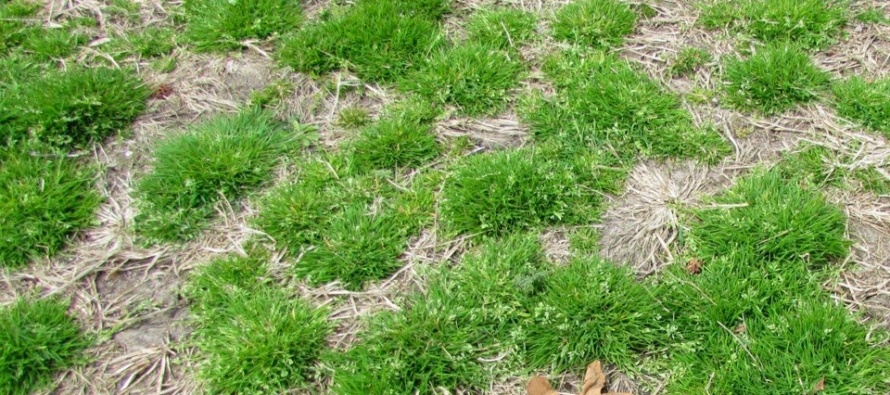
Annual bluegrass growth habit.

Annual bluegrass seedheads.

Annual bluegrass seedhead.




Let me tell You a sad story ! There are no comments yet, but You can be first one to comment this article.
Write a comment