2020 Mississippi Cotton Official Small Plot Variety Trials
2020 Mississippi Cotton Official Small Plot Variety Trials


2020 Mississippi Cotton Official Small Plot Variety Trials
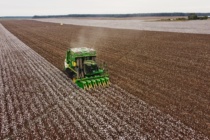

Many consider variety selection as one of the most important management decisions of the season. With lots of excellent soybean varieties to choose from, this decision can sometimes be time consuming. Remember, factors such as soil texture, planting date, row

Mississippi State goes to great lengths to evaluate, assess and analyze corn hybrid performance, so you have good information to make decisions which improve the profitability of your farm. These Hybrid Demonstration trials are grown in numerous on-farm locations throughout the state where you can better evaluate hybrid performance of our region’s most elite hybrids. Full results, including yields and plant characteristics from this year’s trials are published here.

Response of the cotton varieties contained within the 2020 Official Variety Trial to bacterial blight following evaluations conducted on inoculated plots from Stoneville, MS are included in this blog post.
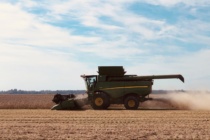
When previously posted, two locations from this year’s program had yet to be harvested. Since that time, harvest has been completed and the link below has been updated to reflect the addition of these data. As a reminder, the annual

The cultivars contained in the Mississippi State University Official Variety Trial (OVT), as well as several additional cultivars, were field-evaluated for their susceptibility/resistance to stem canker. Trials were conducted in Stoneville with toothpick-inoculated plants during the 2020 season. Tables contain the average of the field observations (on a 0-9 scale) as well as an assessment of resistance to stem canker (R, MR, MS, S) based on the evaluations conducted.
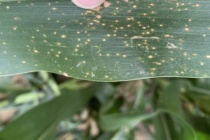
Non-irrigated locations containing the MSU official corn hybrid trials (OHT) were evaluated for foliar diseases during the 2020 season. Curvularia leaf spot and southern corn leaf blight were the two most commonly observed diseases. Little if any northern corn leaf blight (NCLB) was observed; however, where observed the evaluations were captured and are contained in the associated tables from each location. In addition, and when present, lodging was evaluated on a percent scale to capture any meaningful differences between hybrids. Presently, the evaluations from the non-irrigated locations (n=6) are included in the current post.
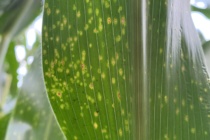
Locations containing the MSU official corn hybrid trials (OHT) were evaluated for foliar diseases during the 2020 season. Curvularia leaf spot and southern corn leaf blight were the two most commonly observed diseases. Little if any northern corn leaf blight (NCLB) was observed; however, where observed the evaluations were captured and are contained in the associated tables from each location. In addition, and when present, lodging was evaluated on a percent scale to capture any meaningful differences between hybrids. Presently, the evaluations from the irrigated locations (n=4) are included in the current post.
The annual MSU Extension Soybean Variety Demonstration Program is conducted using a set of varieties with proven performance. These varieties are grown in a production setting on various soils and management systems around the state. The sets for 2020 represented
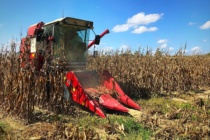
This publication lists those corn hybrids which have demonstrated superior performance in the Mississippi Corn for Grain Hybrid Trials. No other source tests as many hybrids representing today’s market. Thus, this is a great starting point and barometer for you to judge hybrid performance and select the best corn hybrids for your farm.
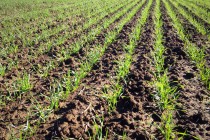
Wheat can be a relatively consistent and productive crop which offers some benefits and diversity for your cropping system. This article addresses planting practices and other management principles needed to optimize wheat productivity.
Mississippi State goes to great lengths to evaluate, assess and analyze corn hybrid performance. These Hybrid Demonstration trials are grown in numerous on-farm locations throughout the state where you can better evaluate hybrid performance of our region’s most elite hybrids. Preliminary grain yield results from this year’s trials are published here.
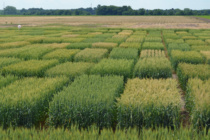
This publication lists those wheat varieties which have demonstrated superior productivity in the Mississippi Wheat and Oat Variety Trials and summarizes their characteristics. This independent information should help you better assess those varieties which are suited for several distinct growing regions in Mississippi.
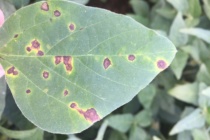
The MSU OVT soybean locations were evaluated for disease during the 2019 season. Multiple diseases were evaluated at multiple locations and are provided in this post. Cercospora blight, frogeye leaf spot (when present), Septoria brown spot, southern blight, and target spot were the most commonly encountered diseases during the season.
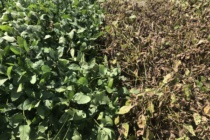
The MSU OVT soybean locations were evaluated for disease during the 2019 season. Multiple diseases were evaluated at multiple locations and are provided in this post. Cercospora blight, frogeye leaf spot (when present), Septoria brown spot, southern blight, and target spot were the most commonly encountered diseases during the season.
This article lists those grain sorghum hybrids which have produced superior yields in the Mississippi Grain Sorghum Hybrid Trials. This information should improve your ability to select well-adapted sorghum hybrids for your farm based on independent performance testing.

Mississippi State University Extension will be hosting several more county row crop meetings during February of 2020. Each meeting will cover issues specific to the region including management topics on agronomics, insects, weeds, diseases, and economics. A meal will be

Mississippi State University Extension will be hosting several county row crop meetings in January and February of 2020. Each meeting will cover issues specific to the region including management topics on agronomics, insects, weeds, diseases, and economics. A meal will
MACA 47th Annual Conference – February 4-5, 2020 – Bost Extension Center on MSU campus The 47th Annual Conference of the Mississippi Agricultural Consultants Association will take place February 4-5, 2019 at the Bost Extension Center, 190 Bost Extension Drive,

The cultivars contained in the Mississippi State University Official Variety Trial (OVT), as well as a few additional cultivars, were field-evaluated for their susceptibility/resistance to stem canker. Trials were conducted in Stoneville with toothpick-inoculated plants during the 2019 season. Tables contain the average of the field observations (on a 0-9 scale) as well as an assessment of resistance to stem canker (R, MR, MS, S) based on the evaluations conducted.

Response of the cotton varieties contained within the 2019 Official Variety Trial to bacterial blight following evaluations conducted on inoculated plots are included in this blog post.
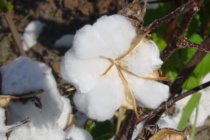
The final data for small plot official variety trials (OVT) as well as large plot, on-farm variety trials is now available. Official variety trials were conducted at a total of 8 locations in 2019 and of-farm trials were conducted on
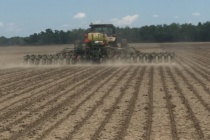
Variety selection can be considered to be one of the most important management decisions for the season. Factors such as soil texture, planting date, irrigation capabilities, row spacing, harvest capacity, among others, will influence the decision of selecting an appropriate
Mississippi State goes to great lengths to evaluate, assess and analyze corn hybrid performance, so you have good information to make decisions which improve the profitability of your farm. These Hybrid Demonstration trials are grown in numerous on-farm locations throughout the state where you can better evaluate hybrid performance of our region’s most elite hybrids. Complete results, including yields and plant characteristics from this year’s trials are published here.

© 2023 Copyright Mississippi Crops. All Rights reserved.
