2011 Rice Research Report
This is a brief review of the many agronomy, breeding, pest management, soil fertility, and water conservation research projects funded by the Mississippi Rice Promotion Board.

This is a brief review of the many agronomy, breeding, pest management, soil fertility, and water conservation research projects funded by the Mississippi Rice Promotion Board.
The 2011 Mississippi State University Row Crop Short Course was held from December 5 – 7, 2011. Topics covered during the Row Crop Short Course included insect and weed management, fertility management, agronomic aspects of crop production, and a farm
You are invited to the 2012 Delta Ag Expo. The Delta Ag Expo provides farmers and others interested in agriculture an opportunity to see the latest technology in agricultural products, services, and information. You will have the opportunity to view agricultural exhibits and talk with extension and research personnel and get up-to-date information for planning your crop year.
I would like to thank everyone for attending the Rice Short Course. At much request, I have included copies of the presentations made at this short course. Also, I have attached a preliminary copy of the Rice Variety Trial Booklet.
Wheat can be established using various methods, but several management practices can certainly enhance your potential for growing a productive crop this season. Those practices include timely planting, appropriate seeding rates and methods, suitable seedbed preparation and fall weed control.
The reality of weed control in the Midsouth today is that the weed control season is never over. Because of glyphosate-resistant weeds, we are either in the process of killing weeds or we should be thinking about how to kill them.
Farmers really don’t have a proverbial “slow time†anymore but now is a good time to remove any weeds from field borders and edges to prevent seed production.
Regulations will go into effect after August 16, 2011 which will affect retailers, commercial applicators, custom blenders, re-fillers, and registrants of refillable pesticide containers. Essentially, these new regulations will affect those who use and handle mini-bulk pesticide containers, including growers.
Nearly everyone who has read this blog, one of many popular press articles, or any of several periodical publications over the past year or two is aware of the problems many growers in Mississippi have with glyphosate-resistant (GR) Palmer amaranth.
2011 is quickly shaping up to be the year in which nothing comes easy. Weather conditions are continuing to cause issues with the 2011 cotton crop. Scattered hail damage from storms over the past couple of days has been reported
MSU Extension Service and MAFES researchers have compiled the following suggestions and information regarding replanting and managing row crops after the flood. Also included is post-flood crop insurance information.
In an effort to aid Mississippi producers in their decision making process a statewide survey was conducted to determine where glyphosate and/or ALS-resistant Palmer amaranth was present in the state.
Many producers have utilized paraquat, sold under the trade name Gramoxone Inteon®, to control emerged weeds at planting. Often times a chemical manufacturer will modify a herbicide formulation to create a safer, more stable, and/or effective herbicide. However, a recent formulation change in Gramoxone Inteon has resulted in some mixing issues in some parts of Mississippi.
Tremendous headway was made this week with regard to cotton planting. Planters started moving late last week as well as over the weekend. By Monday, planting activities for several crops were well underway throughout the state. While flooding is of
Many folks have inquired about specific information regarding wheat vulnerability to herbicides. This article specifically describes and contains photos to help identify the critical hard dough stage, when wheat is generally no longer vulnerable.
It almost goes without saying that weather conditions over the past few weeks have delayed cotton planting. Some growers in the south Delta will likely begin planting operations where field conditions permit over the weekend. However, a 50% chance of
There have been a lot of people questioning “how much of my residual herbicide is left after all this rain?†How much residual value is left may depend on what kind of herbicide was used.
Rice Update April 21, 2011. This update consist of information on planting progress, weather and weed control options. You can download or click play now to view.
Rice Update April 21, 2011. This update consist of information on planting progress and weed control options for producers who have gotten behind due to the windy and wet conditions. You can download or click play now to view.
Increasing populations of glyphosate-resistant and other herbicide-resistant weed species demand we adapt our corn weed control systems to address specific issues and prevent new ones. This may require you to implement strategies for a specific weed, plan on multiple herbicide applications, and improve your application timing.
Soybean planting is underway in many parts of the Delta and I have already received a number of calls about pigweed already being emerged in some fields. It is absolutely imperative that these emerged pigweeds are controlled prior to planting. Early weed competition can significantly impact soybean yields not to mention we don’t have many options to control emerged pigweed in soybean.
One of the objectives of this program is to identify key production limitations, so the Mississippi State University Extension Service and Experiment Station can better direct efforts to develop innovations for our specific problems. This is a summary of such limitations documented during the past few years.
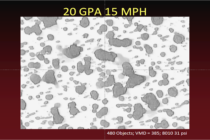
As producers prepare for spray applications this growing season, it is imperative to consider proper spray nozzle selection. As ground speed increases, the orifice size of the nozzle must be increased to maintain the desired GPA. A larger orifice naturally produces larger droplets which equates to poor coverage with contact herbicides. With this in mind, it is recommended to make spray applications at a reasonable ground speed that allows for the use of a spray nozzle that will produce a medium droplet size conducive for contact herbicides.
This update covers rice burndown considerations, hybrid insecticide seed treatments, and 2011 USDA Outlook Agriculture Forum – Rice Planting Intentions.
The 2010 Row Crop Short Course was held at Mississippi State University on December 6 – 8, 2010. As we expanded the Short Course in 2009, we also have adopted technology to record the oral and visual portions of the presentations.

© 2023 Copyright Mississippi Crops. All Rights reserved.
