Managing Palmer Amaranth on Field Borders
Controlling GR Palmer amaranth on turnrows and ditchbanks has become a critical component to weed control.

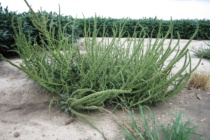
Controlling GR Palmer amaranth on turnrows and ditchbanks has become a critical component to weed control.
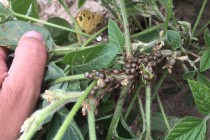
Over the last couple weeks we have begun to get numerous calls about kudzu bugs infesting soybeans. Call are coming from all over the state. We no longer keep up with county level infestations but its safe to say they
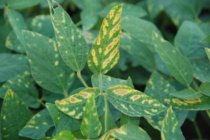
Over the past several years, phytotoxicity has continued to be an important topic of conversation. Phytotoxicity can ultimately result following the application of numerous fungicide products. The specific symptoms associated with phytotoxicity can appear as interveinal chlorosis (either mild, moderate
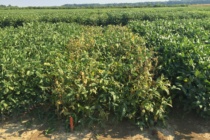
The North Mississippi Research and Extension Center Field Day is scheduled for August 11, 2016 from 8 am to 1:30 pm with lunch provided.
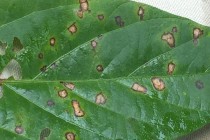
Numerous fungicide trials were conducted during 2015 to determine the efficacy of fungicides on frogeye leaf spot. Included in this post are the majority of the soybean fungicide trials conducted at R2, R3, and R5 in Stoneville, MS on a FLS-susceptible soybean variety. A total 39 different product or product combinations were evaluated. A summary table is included to highlight a specific product and the trials that particular product was included in.
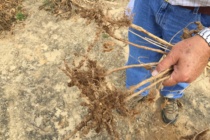
The entries contained in the MSU soybean OVT were screened for their sensitivity to the root-knot nematode during 2015. Contained within this blog post are the root galling responses of 133 entries as well as the yield from the RKN infested location.
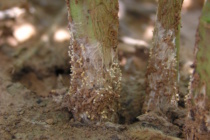
Soybean diseases continue to be observed throughout the MS soybean production system. Over the past several weeks calls have centered on Septoria brown spot, Southern blight, and some limited questions regarding soybean rust.
Numerous questions over the past few weeks regarding fungicide product selection for the R3/R4 soybean application timing. Specific comments regarding the efficacy of products on frogeye leaf spot will be presented in an additional blog post. In this post, comments regarding application volume, fungicide application rates and decision on specific products.
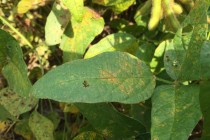
On Tuesday, May 24, 2016, soybean rust was detected on kudzu in Amite, Pike and Wilkinson counties in southwest MS. The observations of soybean rust yesterday mark the earliest appearance of the disease by a little more than 6 weeks as compared to the past. No specific management practices are suggested at this time.
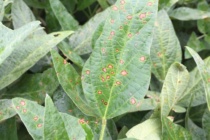
Included in this blog post are updated disease calendars for MG IV and MG V soybean to aid in scouting plant diseases. Keep in mind that several variables can impact the time of year when specific diseases are observed. Planting date, variety susceptibility, number of years a particular field has been in soybean, and prevailing environment can all play a role in when a disease is observed.
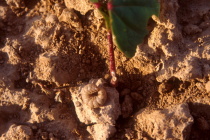
We have had several calls over the last week about cutworms reducing plant densities in cotton, soybean, and non-Bt corn. Based on the number of calls, it appears that cutworm populations are much higher than they have been the last several
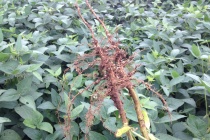
Soybean is a leguminous crop that obtains its nitrogen (N) from an association with a bacterium in the soil called Bradyrhizobium japonicum. The association between the soybean and the bacterium takes place in nodules that form on the soybean roots
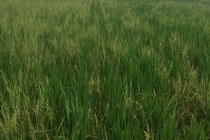
Barnyardgrass that is allowed to survive and produce seed in soybean can cripple a rice weed control program the following year.
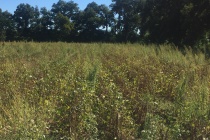
Suggested herbicide programs in Mississippi soybean have been updated to address multiple resistance to glyphosate, ALS, and/or PPO herbicides in Palmer amaranth.
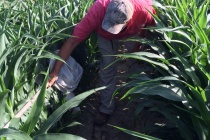
Mississippi State University will be hosting 5 scout schools this year. We have transitioned over the years to make these trainings much more diverse than insect pest alone. This year we will be including insects, disease, fertility, and herbicide symptomology.
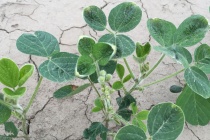
Observing the preplant intervals for 2,4-D and dicamba prior to planting is important.
Mid-South Farm and Gin Show convenes in Memphis February 26 If you didn’t get a new tractor, combine or other piece of machinery for Christmas, the perfect opportunity to see the latest models is right around the corner. The 64th
The venue is the Cook Convention Center, Memphis. All available footage is taken, every inch of the Convention Center, as well as the sidewalk outside the Center on Main Street in Memphis, is filled with exhibits, machinery, equipment, and products
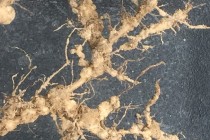
The entries contained in the MSU soybean OVT were screened for their sensitivity to the root-knot nematode during 2014 (and again in 2015 – data forthcoming). Contained within this blog post are the root galling responses of 142 entries as well as the yield from the RKN infested location.
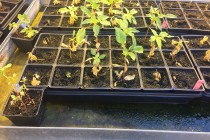
Preliminary results indicate that Palmer amaranth resistant to PPO herbicides is likely in Mississippi
The 2016 Insect Control Guide for Agronomic Crops is now available online. Hard copies will be available in January. Notable changes this year include the removal of pyrethroid insecticides for bollworm control in all crops due to resistance and poor
The results of the 2015 MSU-ES Soybean Variety Demonstration Program have been updated to include disease ratings for Cercospora blight, frogeye leaf spot, Septoria brown spot, and Target spot. These evaluations were collected at many locations in 2015 by Dr.
Variety selection is one of the most critical management decisions associated with soybean production. Factors such as soil type, planting date, irrigation capabilities, row spacing, harvest capacity, and others may influence the decision of selecting an appropriate variety for profitable
The 60th Annual Tri-State Soybean Forum will be held at Mississippi State University’s Delta Research and Extension Center on January 8, 2016. Registration will begin at 8 a.m. followed by the program at 8:30. Presentations will include pertinent information for
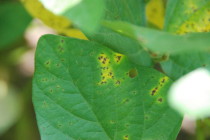
A Maturity Group IV and V variety trial was conducted in Verona, MS at the NMREC during the 2015 season. Yield and disease data are included in the attached report for all entries contained in the trial (RoundUp, Conventional and LibertyLink).

© 2023 Copyright Mississippi Crops. All Rights reserved.
