Row Crop Short Course Registration Reminder
This is your last chance to pre-register for the upcoming MSU Row Crop Short Course. Please take the opportunity to register free of charge.


This is your last chance to pre-register for the upcoming MSU Row Crop Short Course. Please take the opportunity to register free of charge.
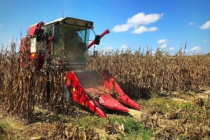
This publication lists those corn hybrids which have demonstrated superior performance in the Mississippi Corn for Grain Hybrid Trials. No other source tests as many hybrids representing today’s choices in the market. Thus, this is a great starting point and barometer for you to judge performance and select the best corn hybrids for your farm.
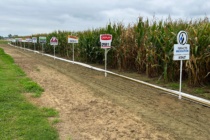
Mississippi State goes to great lengths to evaluate corn hybrid performance. These Corn Hybrid Demonstration trials are grown in numerous on-farm locations throughout the state where you can better analyze hybrid performance of our region’s most elite hybrids. Preliminary grain yield results from this year’s trials are published here.
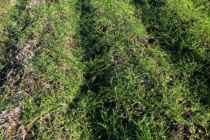
Cover crops can be seeded in agricultural fields using various methods used to plant small grains or forages. These seeding methods commonly range from using a grain drill, to broadcasting. Utilizing a drill offers more control of seeding rate, distribution,
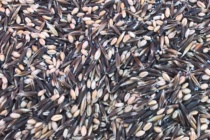
Cover crop seed selection can be confusing due to the numerous choices available. Different species have traits which let them serve specific purposes. Various goals can be achieved if you realize there are three primary groups of cover crops and consider the resulting benefits and limitations. This will greatly improve your cover cropping outcome.
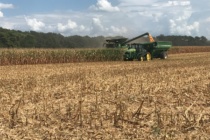
Corn harvest should ramp up soon as grain matures and dries down to an agreeable moisture for harvest. Understanding how weather and other factors affect grain drying, potential harvest losses, and moisture dockage can greatly help improve your harvest efficiency and success.
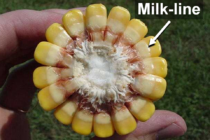
As the corn crop nears maturity, knowing whether you need to roll poly pipe out or when you can safely terminate irrigation, without sacrificing yield, or wasting money is likely the most important decision that will affect your bottom line. This article outlines the steps needed to help make these decisions accurately and reliable.
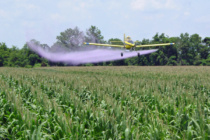
As the Mississippi corn crop approaches tassel, crop health and weather may greatly affect crop response to various management inputs, including nitrogen fertilizer or other products. This article will discuss factors that may affect your strategy and improve your chance for a profitable response.
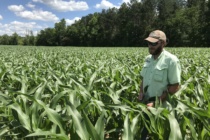
Corn response to nitrogen fertilizer is a dynamic situation that becomes considerably more challenging when rain is plentiful. This article gives recommendations to improve corn response to nitrogen fertilizer and reduce risks in the Midsouth.
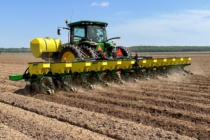
When rain or other issues limit planting opportunities, you may be wondering how to proceed with crop planting intentions. This publication helps address that question by explaining how corn responds to late planting when grown in different production systems based upon research conducted at Mississippi State University.
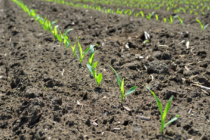
In these tough economic times we devote considerable effort to trimming the fat and focusing inputs where they will improve return on investment. The limiting factors will vary, but these are some of many potential factors which are very important.
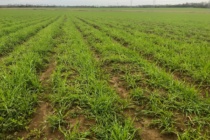
Cover crops can improve soil health and water quality and are being grown on more acres. However, their growth extends into the spring and may present challenges for primary crops, depending upon when you decide to terminate them with a burndown herbicide. We have been researching these dynamics so that we may implement strategies to realize benefits while minimize risk for corn production.
This publication lists those corn hybrids which have demonstrated superior performance in the Mississippi Corn for Grain Hybrid Trials. No other source tests as many hybrids representing today’s choices in the market. Thus, this is a great starting point and barometer for you to judge performance and select the best corn hybrids for your farm.
As the corn crop nears maturity, knowing when you can safely terminate irrigation, without sacrificing yield, or wasting money and labor through unnecessary irrigation is likely the most important decision that will affect your bottom line. This article outlines the steps needed to help make these decisions accurately and reliable.
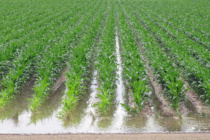
At the first hint of summer weather, there is often a rush to replenish moisture in corn fields with irrigation. However, inadequate soil moisture is not nearly as limiting as usually perceived. This article will discuss when to initiate irrigation based upon what is best for the corn crop.
Corn is very dependent on stand quality and uniformity to optimize productivity. Although things look promising for early planting this spring, there is typically considerably more risk associated with adverse weather for early plantings, compared to later in the spring. This article discusses how to assess corn planting suitability, strategies to improve your stand, and factors that affect what seeding rate you should plant.
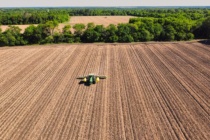
Agenda_Hinds Co Agro Producers Agenda_Leflore Co Agro Producers Agenda_Monroe Co Agro Producers Mt 26_021324 *start time 9:30 a.m.* Agenda_Union Co Agro Producers Agenda_Tunica Co Agro Producers Agenda_Grenada Co Agro Producers
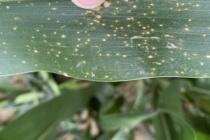
Non-irrigated locations containing the MSU official corn hybrid trials (OHT) were evaluated for foliar diseases during the 2023 season. Curvularia leaf spot was the most prevalent foliar disease observed. A limited amount of southern rust was observed at two locations. Data are presented as the severity of each disease from each irrigated location on a 0-9 scale for each of the hybrids included in the irrigated location evaluations. Presently, the evaluations from the non-irrigated locations (n=5) are included in the current post.
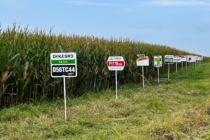
Mississippi State goes to great lengths to evaluate, assess and analyze corn hybrid performance, so you have good information to make decisions which improve the profitability of your farm. These Hybrid Demonstration trials are grown in numerous on-farm locations throughout the state where you can better evaluate hybrid performance of our region’s most elite hybrids. Full results, including yields and plant characteristics from this year’s trials are published here.

2023 MSU Row Crop Short Course December 4-6 Cotton Mill Conference Center Starkville, MS Meeting Registration: Preregistration ends on November 21. Registration after November 21, including at the door during the event, will be $40 per person. The following
This publication lists those corn hybrids which have demonstrated superior performance in the Mississippi Corn for Grain Hybrid Trials. No other source tests as many hybrids representing today’s choices in the market. Thus, this is a great starting point and barometer for you to judge performance and select the best corn hybrids for your farm.
2023 MSU Row Crop Short Course December 4-6 Cotton Mill Conference Center Starkville, MS Meeting Registration: Preregistration ends on November 21. Registration after November 21, including at the door during the event, will be $40 per person. The following
As the corn crop nears maturity, knowing when you can safely terminate irrigation, without sacrificing yield, or wasting money and labor through unnecessary irrigation is likely the most important decision that will affect your bottom line. This article outlines the steps needed to help make these decisions accurately and reliable.
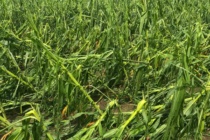
Fields in numerous areas around the state have taken a beating from hail and wind associated with recent storms. Several different types of damage may have occurred depending upon the type of storm, including hail damage, lodging and green snap. This article will describe what to expect.
At the first sign of summer weather patterns, Midsouth corn growers often get nervous about moisture stress. However, inadequate soil moisture is not nearly as limiting as usually perceived – considering we have abundant moisture virtually all spring. In fact, excessive moisture can stress corn development and hamper yields, if we trigger irrigation too early.

© 2023 Copyright Mississippi Crops. All Rights reserved.
