Southwestern Corn Borer Monitoring – Week ending 7/5/2025
On June 30th, the United States Department of Agriculture (USDA) released its annual June Acreage report, providing the first official survey-based estimate of actual planted acreage for the 2025 crop year. The June report provides a critical benchmark by presenting
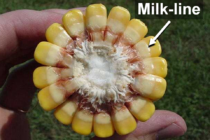
As the corn crop nears maturity, knowing whether you need to roll poly pipe out or when you can safely terminate irrigation, without sacrificing yield, or wasting money is likely the most important decision that will affect your bottom line. This article outlines the steps needed to help make these decisions accurately and reliable.
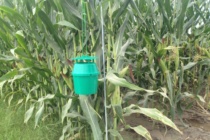
Southwestern corn borer trap counts continue to remain low across the state.
Trap deployment began this week, so minimal trap numbers are being reported. However, no corn borers were detected in the limited traps that were reported.
At the first hint of summer weather, there is often a rush to replenish moisture in corn fields with irrigation. However, this year rains have delayed needs for corn irrigation much later than normal. Since most corn has now tasseled, how will this affect irrigation management?
As the Mississippi corn crop approaches tassel, crop health and weather may greatly affect crop response to various management inputs, including nitrogen fertilizer or other products. This article will discuss factors that may affect your strategy and improve your chance for a profitable response.
Corn response to nitrogen fertilizer is a dynamic situation that becomes considerably more challenging when rain is plentiful. This article gives recommendations to improve corn response to nitrogen fertilizer and reduce risks in the Midsouth.
When rain or other issues limit planting opportunities, you may be wondering how to proceed with crop planting intentions. This publication helps address that question by explaining how corn responds to late planting when grown in different production systems based upon research conducted at Mississippi State University.
In these tough economic times we devote considerable effort to trimming the fat and focusing inputs where they will improve return on investment. The limiting factors will vary, but these are some of many potential factors which are very important.
Cover crops can improve soil health and water quality and are being grown on more acres. However, their growth extends into the spring and may present challenges for primary crops, depending upon when you decide to terminate them with a burndown herbicide. We have been researching these dynamics so that we may implement strategies to realize benefits while minimize risk for corn production.
Due to the seasonality of crop prices, farmers often have opportunities to make profitable pre-harvest sales. Historical price patterns indicate that new crop pricing opportunities in the spring and summer are generally more favorable than harvest-time sales. As can be
Mississippi State goes to great lengths to evaluate, assess and analyze corn hybrid performance, so you have good information to make decisions which improve the profitability of your farm. These Hybrid Demonstration trials are grown in numerous on-farm locations throughout the state where you can better evaluate hybrid performance of our region’s most elite hybrids. Complete results, including yields and plant characteristics from this year’s trials are published here.
This publication lists those corn hybrids which have demonstrated superior performance in the Mississippi Corn for Grain Hybrid Trials. No other source tests as many hybrids representing today’s choices in the market. Thus, this is a great starting point and barometer for you to judge performance and select the best corn hybrids for your farm.
Mississippi State goes to great lengths to evaluate corn hybrid performance. These Corn Hybrid Demonstration trials are grown in numerous on-farm locations throughout the state where you can better analyze hybrid performance of our region’s most elite hybrids. Preliminary grain yield results from this year’s trials are published here.
Tight margins and high expenses tempt us to consider managing crop residue with fire, rather than tillage or other alternatives. However, fire will reduce recycling of organic matter and nutrients. Thus, burning produces several negative consequences that can definitely diminish profit.
We have seen our first large spike in Southwestern corn borer of the growing season in the central to northern portion of the state. Fortunately, timely planted corn should be nearing a stage where borers are not much of a
We welcome you to attend the Row Crop Update at the 2024 Mississippi Agricultural Industry Council Annual Convention. This event is hosted at Perdido Beach Resort in Orange Beach, Alabama on Wednesday, July 24 starting at 8:00am.
As the corn crop nears maturity, knowing when you can safely terminate irrigation, without sacrificing yield, or wasting money and labor through unnecessary irrigation is likely the most important decision that will affect your bottom line. This article outlines the steps needed to help make these decisions accurately and reliable.