Off-target Herbicide Movement to Rice
As rice approaches reproductive growth stages, it is less likely to recover from injury due to off-target herbicide movement.

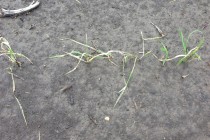
As rice approaches reproductive growth stages, it is less likely to recover from injury due to off-target herbicide movement.
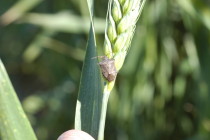
Calls are starting to come in about stink bugs in heading wheat. It is not uncommon to find numerous stink bugs in wheat after head emergence. Species attacking wheat are typically rice stink bug and brown stink bugs but greens can sometimes be found. While it may seem very alarming, keep in mind it takes extremely high numbers to cause economic damage to heading wheat.
According to the National Agricultural Statistics Service in Mississippi, there were 1.8 days suitable for fieldwork for the week ending Sunday, April 19, 2015. Topsoil moisture supplies were 0 percent very short, 1 percent short, 37 percent adequate, and 62
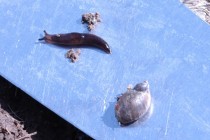
I have recently received a few call about slugs in corn and soybeans. I suspect this will increase when more crops emerge in the Hill region of the state as well. Slug problems usually start on corn first, then move to soybeans, then cotton in our area. This is only because we typically plant in this order. Slugs have been a sporadic problem in MS row crops over the years with increased occurrence since 2004. This has been exclusively a no-till or reduced till problem, particularly no-till behind a grass crop like corn or grain sorghum. Cool wet years are particularly favorable for slug problems to develop.
Strong markets are driving Mississippi growers to plant a lot more grain sorghum than what could have been, considering the recent development of Sugarcane aphids as a threat to sorghum production. This article gives guidelines for getting your sorghum crop off to a good start.
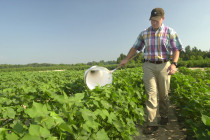
Mississippi State University will be hosting 5 scout schools this year. We have transitioned over the years to make these trainings much more diverse than insect pest alone. This year we will be including insects, disease, fertility, weed identification, and herbicide systems. There will be numerous hands on displays of insects, weeds, nutrient deficiencies in all major row crops, and fertilizer characteristics. CEU’s Provided: Nutrient Management = 1.5, Integrated Pest Management = 3, Crop Management = 1
Much like the last 2-years, as rains delay corn planting progress, more concerns arise regarding whether you will have ample opportunity to plant your corn crop in a suitable time window. This article states new guidelines for late corn plantings based upon recent MSU research.
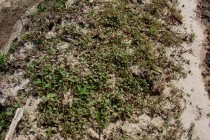
Most weed management decisions in Mississippi soybean are based on managing glyphosate-resistant (GR) Palmer amaranth.
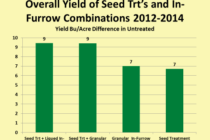
Although every major field crop we grow in Mississippi is responsive to at planting insect protection; field corn is perhaps the most consistent. Why is this?
Updated 2015 Mississippi Grain Sorghum Enterprise Budget
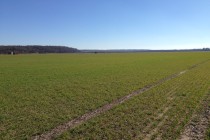
Wheat diseases can be observed in almost any wheat field throughout the season. However, when wheat moves beyond the tillering growth stages scouting for the presence of foliar diseases should be conducted. Many, but not all of the foliar disease encountered in MS can result in a yield loss. But, additional issues encountered in wheat fields can oftentimes be easily confused for foliar diseases.
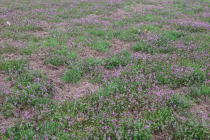
Burndown herbicides programs for soybean must often be addressed on a field-by-field basis.
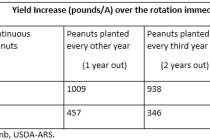
While we wait for the fields to dry up enough to get the 2015 planting season underway, here are a few peanut-related issues to pay attention to going into the season. – Jason Sarver • Inoculant usage continues to be
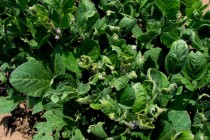
There are a multitude of 2,4-D and dicamba formulations labeled for application to agricultural fields.
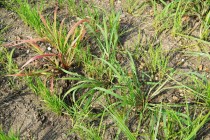
Barnyardgrass is resistant to five herbicide modes of action in rice.
The tarnished plant bug is the most important insect pest of cotton in the Mississippi Delta. Management with insecticides has become difficult in recent years and more tools are needed to economically manage this pest. Although it is early March and we are getting pair of unusual winter storms in the Delta, it is not too early to start making a plan for managing tarnished plant bugs in cotton. We have done a lot of research over the last several years with the goal of making tarnished plant bug management more economical for producers without sacrificing yield. See the attached document for more details on the best management practices listed below.
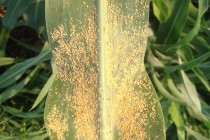
In 2014 a new pest of MS grain sorghum, Sugarcane aphid, made a dramatic entry infesting every county that grew the crop. This pest originally showed up in grain sorghum in Texas and Louisiana in 2013 with a single find very late in the season in Bolivar County, MS. By the end of 2014, this pest quickly spread throughout the entire southeast.
The previously scheduled Mississippi Soybean Promotion Board seminar dates in Tunica, Verona, and Macon for Wednesday (2/25) and Thursday (2/26) have been CANCELED due to the potential for inclement weather over the next 36 hours. Future dates will be listed on the Mississippi Crop Situation Blog and locations will likely not change. Please stay tuned for further announcements.
Farmers attending the Mid-South Farm and Gin Show, February 27, in Memphis, will want to attend the Mid-South Ag Forum, scheduled for 1:30 p.m. on the Mezzanine Level of the Cook Convention Center. This special seminar features information on successful
This effort lists those grain sorghum hybrids which have demonstrated superior productivity in the MSU MAFES Grain Sorghum Hybrid Trials and neighboring University trials. This information should help you pick well-suited sorghum hybrids for Mississippi.
Three more opportunities exist for ag-related personnel to attend the Mississippi Soybean Promotion Board sponsored seminar series on nutrition management, nematode sampling and management, and irrigation practices. Meetings are scheduled next week in Tunica (2/25; 9 am), Verona (2/26; 9 am), and Macon (2/26; 2:30 pm).
The next few days will be abnormally frigid in North Mississippi. This increases the risk of chilling injury to sweetpotatoes in storage, and those being transported to or from packing sheds. Chilling injury occurs when roots are exposed to temperatures
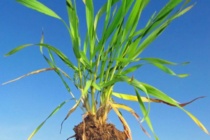
Environmental factors play a substantial role in nitrogen fertilization for wheat producers in the Mid-south. This article gives guidelines for getting optimal wheat response to your nitrogen fertilizer.
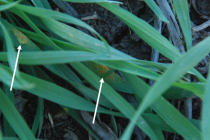
Stripe rust was detected in wheat in Washington County, MS in the wheat variety trial plots. Wheat fields in MS should be scouted at this time for the presence of stripe rust. Fungicide applications with products in the triazole (DMI) class of fungicides will prevent spread of the disease and in some cases where the disease has occurred and been observed in a wheat field may protect yield.
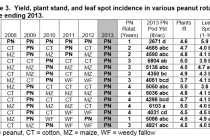
I have been surveying growers, extension folks, consultants, and industry personnel over the last few weeks and it seems that the consensus is that we are going to significantly increase peanut acreage in the 2015 growing season. I think the

© 2023 Copyright Mississippi Crops. All Rights reserved.
