2018 Row Crop Short Course Podcast
Darrin Dodds and Angus Catchot discuss the Row Crop Short Course and how it got to where it is today. Click Mississippi Crop Situation Podcast Logo to Play
The program for the 2018 Mississippi State University Row Crop Short Course has been finalized and over 650 people have already pre-registered for the event. The 2018 Row Crop Short Course will be held at the Cotton Mill Conference Center
Two workshops will be held regarding seed cotton base acre allocation. The first will be held on Tuesday, November 6 at 1 p.m. at the Mississippi Farm Bureau Federation headquarters in Jackson, MS. The second will be held on Wednesday,
The 2018 USDA-AMS Cotton Varieties Planted Report for the U.S. was released on October 4, 2018. This report is a compilation of survey data regarding varieties planted and is the only publicly available report regarding percentage of total acres planted
The program for the 2018 Mississippi State University Row Crop Short Course has been finalized and over 350 people have already pre-registered for the event. The 2018 Row Crop Short Course will be held at the Cotton Mill Conference Center
Bacterial blight of cotton continues to be a disease of importance in the Mid-southern U.S. A project, sponsored by Cotton Incorporated, was recently completed and resulted in the development of a rapid, molecular diagnostic tool to detect the bacterium from infected cotton material. Even though the Mississippi Crop Situation blog is not the best venue for this type of post, the information contained in the post can reside here as a semi-permanent location for all interested parties to obtain the molecular diagnostic protocol since this project was sponsored by check-off funds.
The program for the 2018 Mississippi State University Row Crop Short Course has been finalized and registration is open to those who would like to attend. The 2018 Row Crop Short Course will be held at the Cotton Mill Conference
The final cotton defoliation training will be held on Tuesday, September 4th at Mid-South Ag Equipment in Tunica, MS. Mid-South Ag Equipment is located at 4028 Josephine Road. The defoliation training will begin at 10 am and will conclude with
The second of three cotton defoliation trainings will be held on Monday, August 27th at the farm headquarters of Glen and Rodney Mast. Mast Farms headquarters is located at 2594 Carson Road, Crawford, MS. The defoliation training will begin at
A series of cotton defoliation training sessions will be held in Mississippi over the next couple of weeks. Given that a portion of this crop will defoliated somewhat earlier than in the past few years as well as the fickle
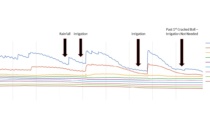
We have reached the time of year when irrigation is typically terminated in many areas of the state. Our recommendation for irrigation termination is as follows. For furrow irrigated fields, irrigation should be terminated at first cracked boll. In many
Given the time of year, here is a re-post of an article from a few years ago: The last effective bloom date is the last date that a white flower will accumulate enough heat units to mature into a harvestable
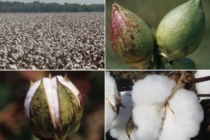
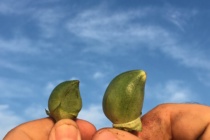
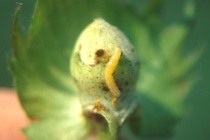
Several calls and pictures have came in this week regarding “parrot-beaked” cotton bolls. There are a number of things that can result in parrot beaked bolls including insect damage, heat stress, and water stress as well as others. The root
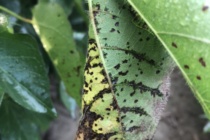
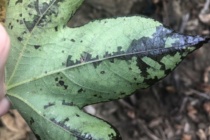
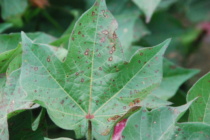
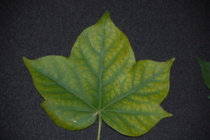
Numerous questions over the past two weeks regarding the presence of foliar leaf spots in cotton. For the most part, limited reports of bacterial blight and target spot have been made. However, the specific location of lesions within the cotton canopy can oftentimes aid in the proper disease diagnosis.
We welcome you to attend the Row Crop Update at the 2018 Mississippi Agricultural Industry Council Annual Convention. This event is hosted at Perdido Beach Resort in Orange Beach, Alabama on Wednesday, July 25.
We have been getting reports of bollworm moth activity and low levels of eggs for about 10 days now in cotton. This week seems to be the week when the activity has really picked up and there are a lot
Rainfall has minimized the need for cotton irrigation in many areas up to this point. Some areas between Clarksdale and Tunica and isolated areas in the south Delta are dry and have irrigation water running. As everyone knows, cotton irrigation
The 2018 cotton crop in Mississippi has some degree of difference in terms of crop maturity at this point in the growing season. Some growers have cotton that has been blooming for nearly three weeks while others have blooms that
So far, the 2018 cotton crop is off to a good start. Good growing conditions caused cotton to grow off from thrips pretty quick and plant bugs have been fairly light so far this year. A lot of cotton has
This article is dated but applies very well today given the pop up showers across most of the state lately. Every year when afternoon thunderstorms start popping up, the phone starts ringing about rainfastness. Rainfastness simply means the amount of
Numerous questions have came in over the past 7-10 days regarding managing cotton growth with plant growth regulators. While every situation can be unique with respect to cotton growth and development and subsequent plant growth regulator use, the slides given
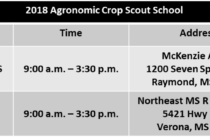
Mississippi State University will be hosting 2 scout schools this year. We have transitioned over the years to make these trainings much more diverse than insect pest alone. This year we will be including insects, disease, fertility, and herbicide symptomology.
Over the years many have questioned whether the use of a seed treatment is considered IPM because they are used prior to the onset of a problem. In our area, and across most of the cotton belt, thrips are considered
As the 2018 cotton season approaches, it is a good time to look back at 2017. From an insect management standpoint, the number one thing that stands out about last year is the amount of foliar sprays that were made
I have recently received a few call about slugs in corn. I suspect this will increase in more crops as planting continues and they begin to emerge. Slug problems usually start on corn first, then move to soybeans, then cotton in our area.