Podcast: Early Season Insect Management in Cotton
This podcast discusses threecornered alfalfa hoppers, thrips, and aphids in cotton. Please click the icon below to listen to the podcast.
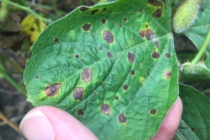
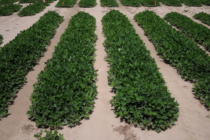
The MSU OVT soybean locations were evaluated for disease during the 2018 season. Multiple diseases were evaluated at multiple locations and are provided in this post. Cercospora blight, Septoria brown spot, southern blight, and target spot were the most commonly encountered diseases during the season.
Most of the corn disease questions over the past week to 10 days have had to do with diseases in the lower canopy. Common rust has been one of the most commonly observed diseases and continues to be observed once plants reach reproductive growth stages.
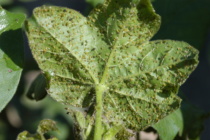
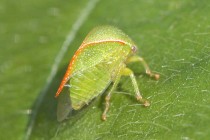
I have had quite a few calls this year about threecornered alfalfa hoppers in cotton. There have been a few treatments on limited acres to date. In the past damage has usually been confined to field borders, but again this
Square retention is a critical component of early season plant bug management. I would strongly encourage you to take square retention counts along with your sweep net counts prior to bloom. Not only does this help in the decision making
The projected wind maps and storm track maps for Invest 91L have started to stabilize. See http://trackthetropics.com/invest91/ It is possible that this storm has picked up fungal spores from peanuts grown around the base of the Yucatan peninsula. If so,
As the Mississippi corn crop approaches tassel stage, weather has fluctuated from wet to dry conditions during recent weeks. Thus, this may affect your strategy regarding application of various management inputs, including nitrogen fertilizer or other products. This article will discuss factors that will improve your response.
The first week of dry, hot weather has folks scrambling to get ready to irrigate and often creates more anxiety than necessary. Deciding when to start irrigating corn can be confusing, but this article focuses on those factors which will help you make that decision and make more corn.
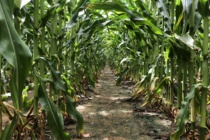
Vegetative growth stages of corn or sorghum are determined by counting the number of fully emerged leaves with leaf collars present. This methodology can be used to anticipate growth and determine appropriate timing of many management decisions, including herbicide application, sidedress fertilizer, etc….
Recently the Mississippi Peanut Growers Association selected this project for funding to better understand herbicide application practices in MS peanut production. I have put together a brief survey that I would ask you to take to better address your needs
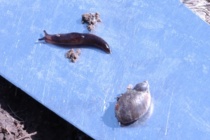
Click to listen Management of Slugs in MS Row Crops Podcast
To say that this planting season has been full of challenges with respect to weather conditions would be an extreme understatement. According to the USDA NASS, Mississippi soybean planting as of May 12 is only 33% complete. The reality of
The 2019 planting season has gotten off to a rough start with all of the rain. Today (Thursday May 9), we have gotten well over 4 inches of rain in the last 24 hours in Stoneville and a lot of
Mississippi State University will be hosting 2 scout schools this year. We have transitioned over the years to make these trainings much more diverse than insect pest alone. This year we will be including insects, disease, fertility, and herbicide symptomology.
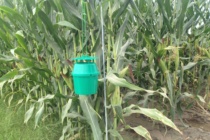
Brown stink bugs have been treated on a fair number of acres of corn in the Delta this year. With the loss of Methyl, there are not a lot of good choices to control this pest in corn. We are
Corn productivity may vary considerably depending on what fertilizer source, timing and application method you use. This article discusses how to improve corn response to nitrogen fertilizer and reduce risk of losses.
The U.S. rice industry’s commitment to sustainability dates back generations, long before the word “sustainability” became a popular, if difficult to define, term. The Rice Foundation commissioned this rice industry sustainability report to collect in one place the outstanding accomplishments of
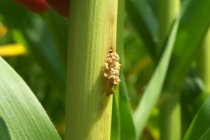
Over the last couple days we have begin to receive a few calls about brown stink bugs in seedling corn in the Delta region of the state. Stink bugs attack corn by feeding through the side of the stem or
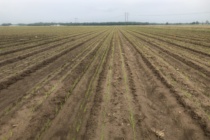
One of our MSU row rice cooperators this year sent me the following pictures of his row rice and conventional levee fields. He has burned the row rice field and it is ready to plant. The conventional levee field had
In this podcast, Angus Catchot, Jeff Gore, and special guest, Crop Consultant, Jeff North discuss cotton insecticide seed treatments and give some predictions on pest problems growers may face in 2019. Click Icon Below to Listen
Proper calibration of agricultural pesticide application equipment can mean the difference in control or failure of a pesticide against the targeted pest and potentially thousands of dollars of savings to the grower. Many growers are now using rate controllers; however,
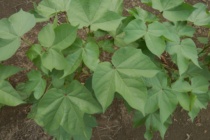
Assessing corn stands to make replant decisions involves numerous factors which will likely influence the outcome. This article discusses those factors, including new research results, which should help make these difficult decisions easier.
Read Kelly, graduate student under the direction of Dr. Jeff Gore, has been investigating the relationship and densities of rice water weevils in furrow irrigated or row rice. During 2017 and 2018, Read conducted rice water weevil studies on eleven
The 2018 Mississippi State University (MSU) Row Crop Short Course, held in December, showcased presentations by growers, industry experts, and row crop specialists on topics such as nematode management, weed control, off-target movement of herbicides, and the 2019 economic outlook.
As rains delay planting progress across much of the state, you may be wondering when to abandon corn planting intentions, and proceed with other crops. This newsletter helps address that question by explaining how corn responds to late planting when grown in different production systems based upon research conducted by Mississippi State University.