Soybean Disease Update: September 7, 2019
Even though we are late in the season, some of the disease situations observed across MS continue to change.

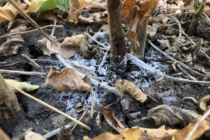
Even though we are late in the season, some of the disease situations observed across MS continue to change.
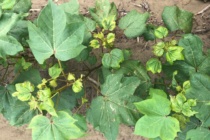
A lot of information regarding a new cotton virus, cotton leafroll dwarf virus (CLRDV), has been swirling around the internet since last fall. A low number of CLRDV-positive samples were detected from Coahoma County, MS last week. The current blog post contains information regarding the virus.
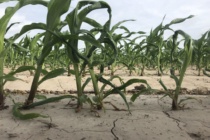
Since June, and most recently over the past few weeks, the corn disease questions have continued to include diseases from the lower canopy, in addition to Curvularia leaf spot. Southern rust was first detected in the MS corn crop on July 5. Since that time a limited number of counties have also observed the disease. However, at present, the amount of southern rust observed has been rather low.
We welcome you to attend the Row Crop Update at the 2019 Mississippi Agricultural Industry Council Annual Convention. This event is hosted at Perdido Beach Resort in Orange Beach, Alabama on Wednesday, July 24 starting at 8:00am.
The 2019 MSU-DREC Rice Producer Field Day will be held on August 8, at the Delta Research and Extension Center at 3:30 p.m. The program will begin at the Capps center with a brief welcome prior to departing for the field
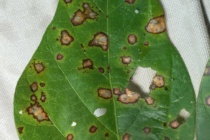
Plant pathogens require a specific set of factors to occur within a given period of time for disease to occur. Oftentimes the disease triangle is the main image behind plant pathology, when a susceptible host, plant pathogenic organism and the environment work together to cause a plant disease. Even though the environment is most often considered the main factor behind the occurrence of plant diseases, the host and the response of the host can also be factored into the occurrence of plant diseases. Defining the different responses of the host (e.g., susceptible versus resistant) is important to understand the level of disease that can occur on a given host.
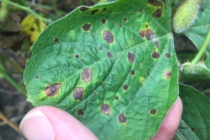
The MSU OVT soybean locations were evaluated for disease during the 2018 season. Multiple diseases were evaluated at multiple locations and are provided in this post. Cercospora blight, Septoria brown spot, southern blight, and target spot were the most commonly encountered diseases during the season.
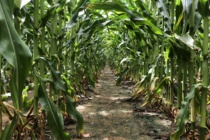
Most of the corn disease questions over the past week to 10 days have had to do with diseases in the lower canopy. Common rust has been one of the most commonly observed diseases and continues to be observed once plants reach reproductive growth stages.
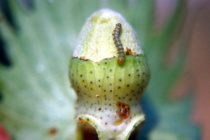
Mississippi State University will be hosting 2 scout schools this year. We have transitioned over the years to make these trainings much more diverse than insect pest alone. This year we will be including insects, disease, fertility, and herbicide symptomology.
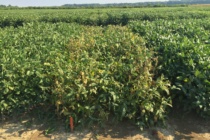
The MSU OVT soybean locations were evaluated for disease during the 2018 season. Multiple diseases were evaluated at multiple locations and are provided in this post. Cercospora blight, Septoria brown spot and target spot were the three most commonly encountered diseases during the season.
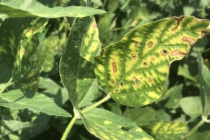
Evaluations of the entries contained in the MSU Official Variety Trial were screened for their response to a fungicide that produces phytotoxicity. Even though differences exist within the commercially available fungicides regarding the amount of phytotoxicity observed over the past few season, the associated evaluations should provide guidance as to the specific response of commercial variety offerings. As has been stated in the past, no yield losses have been observed to occur as a result of the phytotoxicity associated with the commercially labeled fungicides for application to soybean.

Mississippi State University Extension will be hosting several county row crop meetings from January through March of 2019. Each meeting will cover issues specific to the region including management topics on agronomics, insects, weeds, diseases, and economics. A meal will
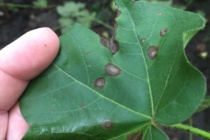
Observations of target spot were made in the MSU OVT location conducted in Lucedale and Stoneville, MS during 2018. Included in this blog post are the observations of disease on leaves as well as the percent defoliation from all 67 varieties included in the 2018 MSU OVT.
Mississippi State University Extension will be hosting several county row crop meetings from January through March of 2019. Each meeting will cover issues specific to the region including management topics on agronomics, insects, weeds, diseases, and economics. A meal will
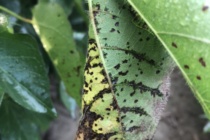
Response of the cotton varieties contained within the Official Variety Trial to bacterial blight are included in this blog post.
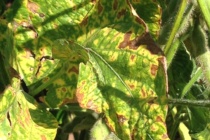
The cultivars contained in the Mississippi State University Official Variety Trial (OVT), as well as a few additional cultivars, were field-evaluated for their susceptibility/resistance to stem canker. Trials were conducted in Stoneville with toothpick-inoculated plants during the 2018 season. Tables contain the average of the field observations (on a 0-9 scale) as well as an assessment of resistance to stem canker (R, MR, MS, S) based on the evaluations conducted.
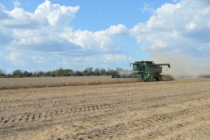
The MSU Extension Soybean Variety Demonstration Program is conducted using a set of varieties with proven performance. These varieties are grown in a production setting on various soils and management systems around the state. The sets for 2018 represented the Roundup Ready
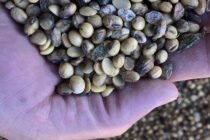
Seed quality issues remain an important topic. Over the two weeks, portions of the MSU OVT that remained in the field post-harvest were harvested to consider quality differences between varieties. Purple seed stain as well as total damage, as a result of purple seed stain, Phomopsis seed decay and other issues that result in discoloration of soybean grain, were evaluated for the MG IV early and late and MG V early and late entries (n=133) in the Stoneville, MS loam OVT location.
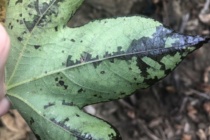
Bacterial blight of cotton continues to be a disease of importance in the Mid-southern U.S. A project, sponsored by Cotton Incorporated, was recently completed and resulted in the development of a rapid, molecular diagnostic tool to detect the bacterium from infected cotton material. Even though the Mississippi Crop Situation blog is not the best venue for this type of post, the information contained in the post can reside here as a semi-permanent location for all interested parties to obtain the molecular diagnostic protocol since this project was sponsored by check-off funds.
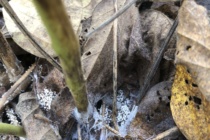
Southern blight of soybean has been a much more widespread occurrence during the later stages of the 2018 season. Diagnosing plant diseases once plants have lost their leaves or do not exhibit all of the symptoms or signs of the fungus can be difficult. The current blog post contains information to differentiate between southern blight and some of the other more common diseases that produce interveinal chlorosis in the field.
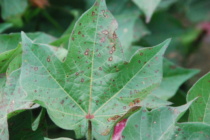
Numerous questions over the past two weeks regarding the presence of foliar leaf spots in cotton. For the most part, limited reports of bacterial blight and target spot have been made. However, the specific location of lesions within the cotton canopy can oftentimes aid in the proper disease diagnosis.
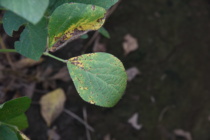
A relatively quiet soybean disease year. However, over the past two weeks an increased number of diseases have been observed. Septoria brown spot and target spot continue to be the most commonly observed diseases.
We welcome you to attend the Row Crop Update at the 2018 Mississippi Agricultural Industry Council Annual Convention. This event is hosted at Perdido Beach Resort in Orange Beach, Alabama on Wednesday, July 25.
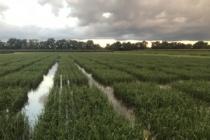
The 2018 MSU-DREC Rice Producer Field Day will be held on August 2, at the Delta Research and Extension Center at 3:30 p.m. The program will begin at the Capps center with a brief welcome prior to departing for the field
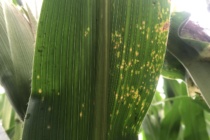
Over the past week the corn disease situation in MS has changed. Several foliar diseases are starting to be observed in our production system. However, the vast majority of the leaf spots present are not yield-limiting issues.

© 2023 Copyright Mississippi Crops. All Rights reserved.
