Rice Stink Bug Update for the Week of June 28
I know it is a little early in the year, and very little if any rice is heading at this time. However, it is not too early to start thinking about rice stink bugs.

I know it is a little early in the year, and very little if any rice is heading at this time. However, it is not too early to start thinking about rice stink bugs.
At this point of the season, we still have some acres of soybean yet to be planted. The majority of those acres will be double cropped soybean behind harvested wheat. Given the environmental conditions that we typically expect during this
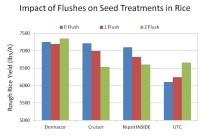
With all of the rainfall that we have had around most of the state, there have been a lot of questions about the impact on seed treatments. In general, most of the seed treatments that are being used in all crops are water soluble. Typical levels of rainfall should not have a negative impact on the efficacy of seed treatments, but excessive rainfall may.
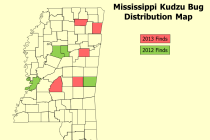
In 2012 Kudzu bugs were found in four counties in Mississippi on Kudzu. All finds were along major highways suggesting they “hitchhiked” in on vehicles. The counties were Warren, Lauderdale, Montgomery, and Carroll. In the last 2 weeks we have
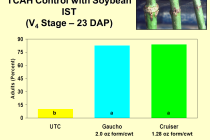
Due to the rain and cold weather this spring a much larger percent of the soybean crop will be planted later than normal. There have been several questions lately about whether or not we should still include an insecticide seed
I have been asked several times over the last week about the need for thrips control now that we have more optimal planting conditions. This is a good question and I will attempt to provide some valuable insight about thrips control in both cotton and peanuts.
Earlier this week Transform WG insecticide from Dow received a full Section 3 label for use in cotton.
This is an important question right now with the weather conditions that we have had over the last few weeks. A considerable amount of corn and a little bit of rice has been planted over the last 3 to 4 weeks. In most of those fields, the crop has either just emerged or has not emerged yet.
What is the importance of a neonicotinoid insecticide seed treatment in soybeans? Basically it is a risk management tool. Soybean seedlings have a tremendous amount of vigor and can tolerate a substantial amount of insect injury. However, early planted soybeans can encounter less than optimal environmental conditions which can stress plants and reduce vigor. Insect injury under these conditions is an additional stress. During 2010, it is estimated that the use of insecticide seed treatments in soybeans resulted in a value of $28.8 million to Mississippi soybean growers.
On February 7th 2013, Mississippi State University hosted the first annual “Future of Agriculture Graduate Student Competitionâ€. The goals of this event were to provide students an opportunity to present their research findings to a diverse audience that included growers, consultants and industry personnel and interact with people from different segments of the agricultural community.
On February 7th 2013, Mississippi State University will host the first annual “Future of Agriculture Graduate Student Competitionâ€. The competition will be open to M.S. and PhD. level graduate students that are working in production agriculture.
The 2012 Row Crop Short Course will be held from December 3-5, 2012 at the Bost Extension Center on the campus of Mississippi State University. Pre-registration is free of charge until November 30 and will be $40 thereafter including at
The 2012 Delta Crop Summit will be held on Tuesday, November 13, in Stoneville, MS. Please see the attached schedule.
Fall armyworm can be a challenging pest to find and an even more challenging pest to manage in some crops. The damage that they cause and their management varies greatly from crop to crop. The reason for this is due to their preferred feeding sites on different crops and the presence of host strains.
This is a friendly reminder that the Rice Field at Delta Research and Extension Service in Stoneville, MS will be tomorrow (July 31, 2012). Registration at Capps Center- 2:00 pm. Rice Market Outlook presentation by Milo Hamilton –
This year started out with most folks expecting higher than usual bollworm numbers due to the mild winter. Couple that with increased corn acres and the perfect storm was thought to be brewing. This is why entomologists get “shifty†when
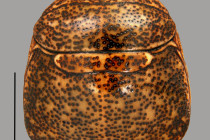
On Friday July 13th a former graduate student from Clemson was traveling through the Vicksburg, MS area where she stopped at a gas station and noticed six adult kudzu bugs on a vehicle in close proximity to a kudzu patch.
Over the past week we have been getting a significant amount of rain across most of Mississippi. Unfortunately, most insects don’t mind the rain. Other than spider mites and aphids, we will likely have to continue managing insects in all crops despite the rain.
It has been a number of years since a field day was conducted at the R.R. Foil Plant Science Research center near the campus of Mississippi State University. To that end, a row crop field day will be held on
Overall, tarnished plant bug numbers appear to be decreasing across the Delta. Several things are contributing to this decline. The biggest factor is that the hot, dry weather is starting to take it’s toll on a lot of the wild
We have gotten multiple calls over the last week about fall armyworms in soybeans and peanuts. In every case, it has been a situation where people got behind on grass control when we were getting a lot of rain a couple weeks ago. In those situations, they have sprayed the grass during the last two weeks with products such as Select or Roundup that are relatively slow acting. A lot of the grass is infested with grass-strain fall armyworm and big worms start moving over into the crop about a week to ten days after the application when the grass starts to die.
The DREC will be holding two separate field days, one for corn and soybean on July 19 and one for rice on July 31.
There have been a lot of questions recently about thrips control in peanuts. In general, thrips will not hurt peanut yields except in EXTREME situations. Peanut seedlings are relatively vigorous compared to most of the crops grown in Mississippi. Foliar insecticide applications, though rarely needed, should be based on plant injury rather than thrips numbers.
Yesterday (4/30), I had a call from a consultant who found about 20% infestation of 3-4 day old SWCB in Non-Bt, V6 stage corn in the Minter City area. There were places in the field that averaged 40-50% infestation, but overall was about 20%.
Word on the street is there will be many more corn refuge checks in 2012 in cotton growing regions. This is due to decreasing compliance over the last couple of years. However, it is getting so complicated that one grower

© 2023 Copyright Mississippi Crops. All Rights reserved.
