Should We Treat Stink Bugs in Wheat?
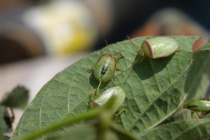
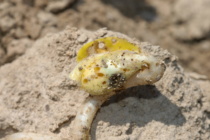
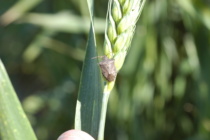
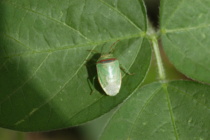
Over the last week or so we have a few calls coming in about stink bugs in heading wheat. It is not uncommon to find stink bugs in wheat after head emergence. However, it takes extremely high numbers to cause
The MSU OVT soybean locations were evaluated for disease during the 2020 season. The MG V entires are contained in the current post. Multiple diseases were evaluated at multiple locations and are provided in this post. Cercospora blight, frogeye leaf spot (when present), Septoria brown spot, southern blight, and target spot were the most commonly encountered diseases during the season. In addition, green stem was also evaluated at multiple locations.
The MSU OVT soybean locations were evaluated for disease during the 2020 season. Multiple diseases were evaluated at multiple locations and are provided in this post. Cercospora blight, frogeye leaf spot (when present), Septoria brown spot, southern blight, and target spot were the most commonly encountered diseases during the season. In addition, green stem was also evaluated at multiple locations.
It is with great regret that we have cancelled the 2020 Row Crop Short Course at Mississippi State University. Due to the global pandemic, we see no viable way to conduct this event. Our team did not make this decision
Soybean rust has been observed to be much more widespread throughout the MS soybean production area this year. Normally, soybean rust is a late-season disease that goes unnoticed and ends up being observed at growth stages when the disease does not likely reduce yield (R6.5+). Soybean rust has been observed for the last three weeks across MS in soybean fields that range from R5.5 to R7. In some specific parts of the state management options have already been suggested due to the rust pressure in adjacent fields.
This is some old data from 2007 but it is still relevant today. How does time of day effect stink bug populations? When this small test was conducted we did not have redbanded stink bugs in our system but I
The corn agronomy guys are also recording Mississippi Crop Situation Podcasts. We are using this format to share our latest recommendations and issues we are finding in the Corn Verification Program and grower fields throughout the state.
We have sampled enough areas at this point to feel reasonably certain that some areas will experience issues with RBSB this season. To what extent is yet to be determined. We will likely not continue the weekly surveys in weeks
*Each week we sample, we will add to the previous weeks post with updated map and new counties This year has been unusual to say the least with the COVID-19 outbreak. During this time, worker availability has become our limiting
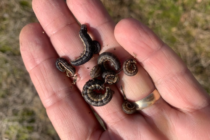
We have gotten numerous calls over the last week about true armyworms in seedling corn. Although this is not extremely unusual, the widespread occurrence of high true armyworm numbers across the southern region in wheat and corn (and grass in
*Each week we sample, we will add to the previous weeks post with updated map and new counties This year has been unusual to say the least with the COVID-19 outbreak. During this time, worker availability has become our limiting
This year has been unusual to say the least with the COVID-19 outbreak. During this time, worker availability has become our limiting factor. It has ultimately limited our ability to conduct as many state wide surveys with student workers at
Locations containing the MSU official corn hybrid trials (OHT) were evaluated for foliar diseases during the 2019 season. Curvularia leaf spot and northern corn leaf blight (NCLB) were the two most commonly observed diseases. Presently, the evaluations from the non-irrigated locations (n=4) are included in the current post. The irrigated locations (n=4) will be posted at a later date.
The Plant Diagnostic Lab is offering free nematode testing for Mississippi soybean fields through August 30, 2020. The free testing, offered as a portion of a check-off funded project by the United Soybean Board, has been expanded to include all plant parasitic nematodes of soybean, not just soybean cyst nematode (SCN).
Although it has been a little warm, winter meeting season is approaching. Certified Crop Advisers can be prepared to get the proper credit for their CEU’s. Do this before the meetings. #mscrops
Click the icon below to listen to the latest podcast where Angus Catchot, Jeff Gore, and Don Cook discuss the current insect situation in cotton around the state.
A lot of information regarding a new cotton virus, cotton leafroll dwarf virus (CLRDV), has been swirling around the internet since last fall. A low number of CLRDV-positive samples were detected from Coahoma County, MS last week. The current blog post contains information regarding the virus.
We welcome you to attend the Row Crop Update at the 2019 Mississippi Agricultural Industry Council Annual Convention. This event is hosted at Perdido Beach Resort in Orange Beach, Alabama on Wednesday, July 24 starting at 8:00am.
The 2019 MSU-DREC Rice Producer Field Day will be held on August 8, at the Delta Research and Extension Center at 3:30 p.m. The program will begin at the Capps center with a brief welcome prior to departing for the field
Plant pathogens require a specific set of factors to occur within a given period of time for disease to occur. Oftentimes the disease triangle is the main image behind plant pathology, when a susceptible host, plant pathogenic organism and the environment work together to cause a plant disease. Even though the environment is most often considered the main factor behind the occurrence of plant diseases, the host and the response of the host can also be factored into the occurrence of plant diseases. Defining the different responses of the host (e.g., susceptible versus resistant) is important to understand the level of disease that can occur on a given host.
The MSU OVT soybean locations were evaluated for disease during the 2018 season. Multiple diseases were evaluated at multiple locations and are provided in this post. Cercospora blight, Septoria brown spot, southern blight, and target spot were the most commonly encountered diseases during the season.
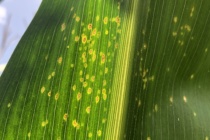
Most of the corn disease questions over the past week to 10 days have had to do with diseases in the lower canopy. Common rust has been one of the most commonly observed diseases and continues to be observed once plants reach reproductive growth stages.
Vegetative growth stages of corn or sorghum are determined by counting the number of fully emerged leaves with leaf collars present. This methodology can be used to anticipate growth and determine appropriate timing of many management decisions, including herbicide application, sidedress fertilizer, etc….
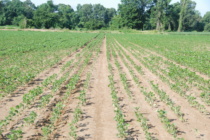
The 2019 planting season has gotten off to a rough start with all of the rain. Today (Thursday May 9), we have gotten well over 4 inches of rain in the last 24 hours in Stoneville and a lot of
Mississippi State University will be hosting 2 scout schools this year. We have transitioned over the years to make these trainings much more diverse than insect pest alone. This year we will be including insects, disease, fertility, and herbicide symptomology.