Chase the Sprayer with the Planter
Historically, we have chased the planter with the sprayer to apply residual herbicides. This presents several potential problems…

Historically, we have chased the planter with the sprayer to apply residual herbicides. This presents several potential problems…
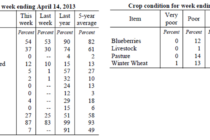
According to the National Agricultural Statistics Service in Mississippi, there were 2.7 days suitable for fieldwork for the week ending Sunday, April 14, 2013. Dry conditions during the first half of the week allowed for some fieldwork to be done. Wet conditions in the last half of the week slowed or stopped all fieldwork. Soil moisture was rated 40 percent adequate, and 60 percent surplus.
As rains continue to delay corn planting progress, more concerns are rising regarding the appropriate “cut-off†date for planting corn. Recent MSU research gives a solid basis for addressing this question.
USDA released their annual Prospective Plantings report and quarterly Grain Stocks reports today (Mar 28). The acreage report was largely in-line with pre-report expectations, but the stocks report had quite a shock for corn supplies and a slight surprise for
Fall-applied residual herbicides went out on a significant amount of acreage in Mississippi during the fall of 2012. In some cases, such as where glyphosate-resistant Italian ryegrass is present, these applications are key components for optimizing weed control. However, in
You must provide numerous resources and management to optimize the opportunity for corn plants to produce high yields. Of course, favorable weather plays a huge role as well. This article describes areas where we can improve corn yield potential.
Although performance generally drives variety selection decisions, varietal maturity is usually considered when making variety selection decisions. To that end, we have updated our cotton maturity chart for 2013. Keep in mind that several factors can affect varietal maturity and
March is here, expectations are high and our fields may dry out soon, if rain holds off. So when should we start planting corn? This article gives tangible recommendations for determining suitable planting time when nature throws us curveballs.
If you need some help deterring blackbirds or other ground-feeding birds from ruining your corn stand, you can make plans now regarding the product Avipel.
The MSU Corn Hybrid Demonstration Program evaluates superior corn hybrids from numerous seed companies who participate in the MSU Corn for Grain Hybrid Trials. Our objective is to provide you more opportunity to evaluate premier corn hybrids and substantially supplement the information gathered in the University Hybrid Trials.
Variety selection is one of the most critical management decisions associated with soybean production. Factors such as soil type, planting date, irrigation capabilities, row spacing, harvest capacity, and other crops grown all can influence the decision for selecting an appropriate
The 2012 Row Crop Short Course will be held from December 3-5, 2012 at the Bost Extension Center on the campus of Mississippi State University. Pre-registration is free of charge until November 30 and will be $40 thereafter including at
A lot of wheat is being seeded now as soils dry and harvest season is winding down. That is a good thing because early planting often contributes to multiple issues which can drastically limit wheat productivity in Mississippi and the Mid-South. This article gives rate guidelines and other tips for successful seeding of small grains.
As a Plant Pathologist, I tend to divide the peanut crop in Mississippi into growing areas based on the “climate†and soils. Both influence the type and amount of disease pressure experienced in that growing area and, incidentally, quality and
(Correction to Mississippi cotton acreage change from March has been made) The much anticipated, and likely to be much debated, 2012 Acreage report from USDA was released this morning (June 29). Nationally, the report bumped up the number of acres
Several soybean fields around the state have unfortunately been impacted from hail associated with recent storms. The big question in these cases is whether or not to replant. This is always a difficult question to answer. Several things need to
Hail damage has occurred in scattered areas over the past week to ten days. Areas around Clarksdale, Sledge, and Yazoo City as well as others have been affected by hail. Deciding whether or not to replant following hail damage can
Rice Acreage: On March 30th USDA estimated that Mississippi will plant 135,000 acres of rice. That is down 16% from 2011 and the lowest acreage since the mid 1970’s. Talking with producers and seed retailers, I would estimate that Mississippi acres will be closer 100,000 acres. There are a lot of farmers across the delta that will not be planting any rice and it has been over 40 years since they have done that. Stagnant rice prices and high urea prices have not encouraged any additional plantings. The recent upswing in urea prices will not have a significant impact on rice acres.
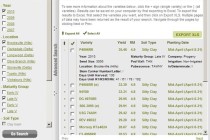
Variety selection is one of the most critical components in maximizing soybean yields. Soil type, planting date, maturity group, and many other factors are key components in selecting the correct variety for your farm. The Mississippi Soybean Promotion Board offers a tool to aid you in your selection.
Corn is quite unique because much of its potential productivity is determined during the planting process. Thus, corn is often much more responsive or dependent on variables implemented during planting than other Southern crops. This article gives planting guidelines for enhancing corn productivity.
We are pleased to announce the EPA has granted the Mississippi Department of Agriculture a Section 18 emergency exemption allowing the use of anthraquinone, which is an unregistered product marketed as Avipel on field or sweet corn seed for the purpose of repelling blackbirds and cowbirds in newly planted corn fields in the state of Mississippi.
Word on the street is there will be many more corn refuge checks in 2012 in cotton growing regions. This is due to decreasing compliance over the last couple of years. However, it is getting so complicated that one grower
For many years, one of the mainstay residual herbicides in soybean weed control systems was metribuzin (Sencor/Lexone). One of the drawbacks to metribuzin use is the sensitivity of some soybean varieties to this herbicide. A research project conducted by Mississippi State University and the University of Arkansas screened some of the modern germplasms available to producers for metribuzin tolerance.
The 2011 Mississippi State University Row Crop Short Course was held from December 5 – 7, 2011. Topics covered during the Row Crop Short Course included insect and weed management, fertility management, agronomic aspects of crop production, and a farm
On behalf of the Mississippi State University Extension Service we would like to cordially invite you to attend the 2011 Row Crop Short Course to be held at the Bost Extension Center on the campus of Mississippi State University from

© 2023 Copyright Mississippi Crops. All Rights reserved.
