Keith Coble Visit DREC
New Mississippi State Vice President of Agriculture, Dr. Keith Coble, shares his vision for the Division of Agriculture with Jason and Tom.

New Mississippi State Vice President of Agriculture, Dr. Keith Coble, shares his vision for the Division of Agriculture with Jason and Tom.
Soil carbon (C) sequestration is the practice of growing plants to capture atmospheric C and store it in the soil to mitigate climate change. Soil carbon sequestration is not a magic bullet for climate mitigation but has a role
Due to restrictions limiting public gatherings related to the pandemic, the MSU Row Crops Team are releasing some virtual educational programs to help prepare for the upcoming growing season. These programs offer Continuing Education Units for Certified Crop Advisors who
Ag Economist Brian Mills from Stoneville visits the podcast studio to discuss farm programs and risk management with Tom and Jason.
Private and public sector stakeholders are striving to boost soil carbon (C) as a climate migration strategy. This note will focus on the science of soil C, and management practices that may increase it. Carbon markets, public policy, and individual
We in Extension sing the praises of soil testing constantly because it provides a snapshot in time of the ability of a soil to provide nutrients to growing plants. The results, along with a research base, are the basis for

The 2021 Delta Ag Expo will be held on February 17th, beginning at 8:30 am. Due to ongoing renovations to the Ag Expo building in Cleveland, this year’s event will be held at the Capps Auditorium at the Delta Research
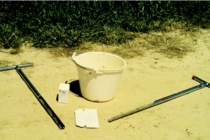
Where does this recommendation based on my soil test results come from? If you are a grower not asking it, start. Three common recommendation philosophies are used to interpret the soil testing data to provide the recommendations. Sufficiency: based on

It takes time to change soils. After making the business decision to actively manage for soil health, producers often are frustrated that results are not immediately apparent! We did all this, and nothing happened! Alternatively, we may see some changes in
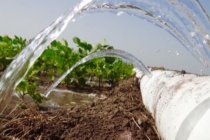
As a reminder, please inform all growers this season Delta Plastics will only be collecting used Delta polytube upon customer request. To schedule a pick-up, contact your local Delta sales rep, or call us at (800)277-9172. We appreciate your business

This article contains the latest expected Price Loss Coverage (PLC) Program payment rates for the 2019 and 2020 marketing years as of November 10, 2020. 2019 Marketing Year The expected PLC payments for the 2019 year are listed in Table

With the latest release of marketing year average (MYA) price projections from the USDA for September 2020, we are able to get a clear picture on expected PLC payments for 2019 and begin forming projections for 2020. 2019 PLC Payments
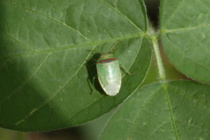
This is some old data from 2007 but it is still relevant today. How does time of day effect stink bug populations? When this small test was conducted we did not have redbanded stink bugs in our system but I

Join the MSU Team for what you thought may never be possible – drainage tile in the Mississippi Delta and the benefits it can provide. Mississippi State is teaming up with Advanced Drainage Systems and Soil-Max on a quick, 2-part
Larry Steckel from the University of Tennessee joins Bobby and Jason on the Call in line to discuss his recent reports of Pigweed Escapes after Auxin application, what this means to Mid-South Agriculture and how growers can move forward.
Bobby hands the podcast over to Whitney as she attempts to rein in the Entomology team on everything related to Soybean insects. Topics range from Stink bugs to Loopers and all insects in between, as well as optimal control strategies

AWD is a water-saving technology that farmers can use to reduce the amount of irrigation water used in rice fields without any yield penalty. In AWD, farmers allow the flood water to recede to a “muddy” state before re-flooding the

Surface sealing in the Mississippi Delta typically occurs in soils that have a low clay and organic matter content but have a high silt fraction, i.e., most of our silt loam soils. Surface sealing, from an irrigation management standpoint, is
Surge Valves are being investigated by the MSU Irrigation Team to increase irrigation application efficiency. When using a surge valve, water is applied in a series of on-off cycles alternating between two irrigation sets. By utilizing surge valves Producers can

Traditionally, many rice farmers chose to flood irrigate their soybeans. Rice farmers were accustomed to pulling levees in rice fields, so it was a natural fit to irrigate soybeans in the same fashion. With the decreasing water levels in the
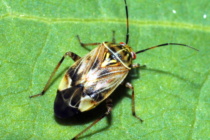
With the season progressing and the onset of pinhead square, square retention will be an important factor in early season plant bug management. Prior to bloom, monitoring square retention is highly recommended as an additional tool to compliment sweep net
Most of the area rice is close to the permanent flood timing or will be after this tropical depression. With water being one of the most expensive inputs of the rice producer, utilizing methods to limit the amount of water
STATE OF MISSISSIPPI DEPARTMENT OF AGRICULTURE AND COMMERCE ANDY GIPSON COMMISSIONER PRESS RELEASE FOR IMMEDIATE RELEASE: June 8, 2020 Mississippi Department of Agriculture and Commerce Contact: Paige Manning, Director of Marketing and Public Relations 601-359-1163 paige@mdac.ms.gov MDAC Continues to Enforce
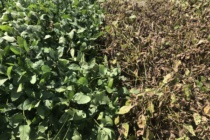
The MSU OVT soybean locations were evaluated for disease during the 2019 season. Multiple diseases were evaluated at multiple locations and are provided in this post. Cercospora blight, frogeye leaf spot (when present), Septoria brown spot, southern blight, and target spot were the most commonly encountered diseases during the season.
By: Evan Gregory, Department of Agricultural Economics Introduction COVID-19 has had a tremendous impact on the U.S economy and agriculture has not been immune from the downturn. Given the current economic environment, the 2020 Row Crop Planning Budgets produced by

© 2023 Copyright Mississippi Crops. All Rights reserved.
