Burndown Scenarios for Mississippi Soybean
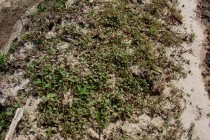
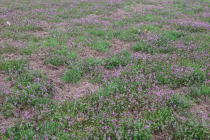
Burndown herbicides programs for soybean must often be addressed on a field-by-field basis.
There are a multitude of 2,4-D and dicamba formulations labeled for application to agricultural fields.
The previously scheduled Mississippi Soybean Promotion Board seminar dates in Tunica, Verona, and Macon for Wednesday (2/25) and Thursday (2/26) have been CANCELED due to the potential for inclement weather over the next 36 hours. Future dates will be listed on the Mississippi Crop Situation Blog and locations will likely not change. Please stay tuned for further announcements.
Three more opportunities exist for ag-related personnel to attend the Mississippi Soybean Promotion Board sponsored seminar series on nutrition management, nematode sampling and management, and irrigation practices. Meetings are scheduled next week in Tunica (2/25; 9 am), Verona (2/26; 9 am), and Macon (2/26; 2:30 pm).
“Pipe Planner is a free, user-friendly, web based application designed to help farmers create the most efficient poly tube irrigation system for their crops,”says Chris DeClerk of Delta Plastics. To assist Mississippi growers in the implementation of Pipe Planner, Lee
Find attached the agenda for the 42nd Annual Delta Ag Expo to be held in Cleveland, MS on Wednesday, January 21 and Thursday, January 22, 2015. We hope to see you in attendance at the Bolivar County Ag Expo Center.
Green stem disorder can be a sporadic issue from year-to-year and field-to-field. In the current blog post a survey is attached whereby individuals can answer five basic questions on their thoughts and opinions regarding the presence of green stem.
Disease severity was rated for each of the OVT soybean entries at all locations planted during 2014. Varieties were rated using a 0-9 scale where 0=no disease and 9=severe disease symptoms. The attachments on this blog post contain the Maturity Group V early and late entries.
The On-Farm Soybean Variety Demonstration Program is conducted using a set of varieties with proven performance. These varieties are grown in a production setting on various soil types and management systems around the state. Demonstration sets for both maturity group
Earlier this year the Mississippi State Chemical Laboratory lowered the fee for poultry litter analysis. Nutrient content of litter used for fertilizer varies up to 60%. Crop producers should have a recent analysis of litter so appropriate land application rates
Variety selection is one of the most critical management decisions associated with soybean production. Factors such as soil type, planting date, irrigation capabilities, row spacing, harvest capacity, and others may influence the decision of selecting an appropriate variety for profitable
Disease severity was rated for each of the OVT soybean entries at all locations planted during 2014. Varieties were rated using a 0-9 scale where 0=no disease and 9=severe disease symptoms. The attachments on this blog post contain the Maturity Group IV and early and late entries. The MG V entries will be along shortly.
Disease severity was rated for each of the OVT soybean entries at all locations planted during 2014. Varieties were rated using a 0-9 scale where 0=no disease and 9=severe disease symptoms. The attachments on this blog post contain the Maturity Group IV and V Conventional and LibertyLink entries. The MG IV and V RR entries will be along shortly.
The 2014 Row Crop Short Course will be held at the Bost Extension Center on the campus of Mississippi State University on December 1-3, 2014. Attendance is free of charge if you pre-register. Pre-registration is available until November 26. Registration
We received a phone call this morning from a Delta grower requesting assistance with his flow meter readings. Before the weather turns wet and cold, he had decided to collect the data from his well’s flow meters for reporting by
The 2014 Row Crop Short Course will be held at the Bost Extension Center on the campus of Mississippi State University on December 1-3, 2014. Attendance is free of charge if you pre-register. Pre-registration is available until November 26. Registration
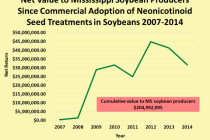
There has been a tremendous amount of scrutiny put on the neonicotinoid class of chemistry in recent years because of the potential link to declines in bee numbers. Researchers are working feverishly across the nation and the globe to determine the exact causes of bee decline. No doubt pesticides can and likely play a role to some degree, but there are many factors that also influence bee health such as habitat loss, Varroa mites, and diseases.
Variety trials were rated at the NMREC to determine the sensitivity of MG IV and V soybean varieties to frogeye leaf spot as well as Cercospora blight. Varieties were using a 0-9 scale where 0=no disease and 9=severe disease symptoms. Yield data will be available in a few weeks as this post only contains the analyzed rating values for the varieties contained in the trial at Verona.
On behalf of the Mississippi State University Extension Service, we would like to cordially invite you to attend the 2014 Row Crop Short Course to be held at the Bost Extension Center on the campus of Mississippi State University from
Soybean loopers are starting to show up in high numbers in many areas of the state. In many cases, soybeans are past the point where yield loss can occur, but there are many later planted soybeans that need to be protected for a while longer. Below are a few tips on when to treat and what to treat with.
This summer we had multiple conversations with producers that either irrigated or had significant rainfall events on their field, but the soil moisture sensors below the 6 inch depth never “detected” the irrigation or rainfall event (see https://www.mississippi-crops.com/2014/06/26/is-my-soil-moisture-sensor-broke/ ).
Foliar diseases of soybean continue to be observed throughout the MS soybean production area. At present, no soybean rust has been detected in MS; however, Cercospora blight and frogeye leaf spot as well as several pod diseases (topic of the next blog post) are being observed in numerous soybean fields.
Phytotoxicity, associated with the application of some specific foliar fungicide products, has been observed in numerous commercial soybean fields again this season. Keep in mind that the symptoms associated with fungicide phytotoxicity will appear quite similar to sudden death syndrome (SDS). However, SDS only occurs in light soil classes. When scouting fields, keep in mind that an entire field with SDS-like symptoms might be the result of fungicide phytotoxicity, thus not a disease after all.
Plan to attend an upcoming Irrigation Termination Turnrow Talk on August 26, 2014 sponsored by the Mississippi Soybean Promotion Board, Mississippi State University Extension Service, and stakeholder organizations of the Delta Sustainable Water Resources Task Force. Soybean producers will have
We have reached the point of the growing season where we have begun to terminate irrigation in soybean. When making this decision, the goal is to make sure that adequate soil moisture is available to ensure that the soybean seeds