Delta Crop Summit – November 13, 2012, Stoneville, MS
The 2012 Delta Crop Summit will be held on Tuesday, November 13, in Stoneville, MS. Please see the attached schedule.

The 2012 Delta Crop Summit will be held on Tuesday, November 13, in Stoneville, MS. Please see the attached schedule.
For the first time, strobilurin-resistant frogeye leaf spot was confirmed in MS during the 2012 season. Numerous states in our region have previously confirmed the presence of the resistant fungus.
Description and symptoms. Yesterday I looked at some defoliating fields in the greater Aberdeen vicinity. The vines looked like someone had used a set of hedge shears to remove the foliage from between the rows and thin it in the
Many diseases of soybean can produce a symptom of interveinal chlorosis. Stem canker, sudden death syndrome, Phytophthora root rot, southern blight, and several other less common diseases in the MS production system can all produce symptoms on the uppermost leaves that appear similar to SDS. However, disorders can also produce the same symptom and are oftentimes readily misdiagnosed at the field level.
Plant pathogens require a specific set of factors to occur at the same time for disease to begin. More often than not diseases require a prolonged conducive environment before the pathogen can produce observable symptoms.
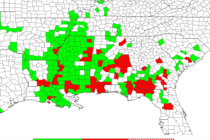
Over the past six weeks soybean rust has been detected in numerous soybean fields throughout Mississippi. Even though it appears that a large number of counties have soybean plants infected with the disease, at present only low levels of soybean
As of Sunday evening, it appears that Tropical Storm Isaac will slow, turn into a hurricane, and hit our Gulf Coast sometime Tuesday. Rainfall amounts are forecast in inches below I-20 and tropical storm conditions are expected to prevail for
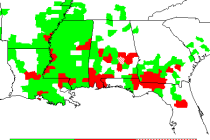
Foliar disease in the soybean crop continue to be observed throughout MS. Presently, soybean rust has been detected in 11 counties, with Lowndes, Noxubee, and Winston being the most current finds (8/21/2012). In addtiion, frogeye leaf spot and Cercospora blight continue to be observed across a greater number of acres.
Foliar leaf spot diseases continue to be observed throughout the MS cotton production area. Determing the particular leaf spot at the field level can be quite difficult especially if the leaf spots are a result of a foliar potassium deficiency. Bacterial blight, Corynespora leaf spot, and various other fungal diseases are being observed at present within our production system.
As a Plant Pathologist, I tend to divide the peanut crop in Mississippi into growing areas based on the “climate†and soils. Both influence the type and amount of disease pressure experienced in that growing area and, incidentally, quality and
Six locations of the MS wheat variety trial plots were rated for the presence of leaf and stripe rust. Included is information regarding the reaction of each of the varieties contained to aid in determing the best wheat varieties with rust tolerance to plant for the 2012/2013 season.
Current update Last of July/First of August and Tropical Storm Ernesto Advisory White mold White mold began germinating and growing on dead organic matter in the south about 18 days ago in south central Mississippi, but really started to kill
To date, the majority of Mississippi’s soybean crop is either blooming, setting pods, or turning color in places. Some isolated fields in parts of Bolivar, Issaquena, and Washington counties have been harvested over the past 10 days. Since July 4,
This is a friendly reminder that the Rice Field at Delta Research and Extension Service in Stoneville, MS will be tomorrow (July 31, 2012). Registration at Capps Center- 2:00 pm. Rice Market Outlook presentation by Milo Hamilton –
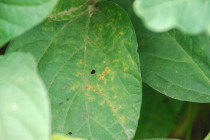
Additional soybean rust has been detected in MS as of last Thursday. At present, 5 counties (George, Issaquena, Jefferson, Pearl River, Pike) contain extremely light soybean rust infections in either commercial soybean fields (George, Jefferson, Pike) or in soybean sentinel plots (Issaquena, Pearl River).
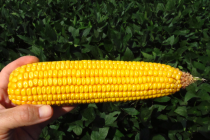
There is some late-planted Mississippi corn which has not reached physiological maturity. This corn may have its yield reduced somewhat by severe problems or stress. Included is a chart which may help assess potential corn yield reduction or risk.
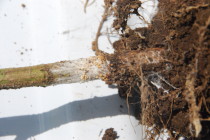
Numerous foliar diseases in our soybean production system are being observed. Frogeye leaf spot, aerial blight, Cercospora blight, and southern blight have been observed on numerous acres at this time.
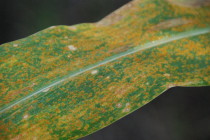
Southern rust continues to be a topic of conversation throughout the MS corn production area. Presently, the disease can be observed at low levels in a patchy distribution throughout the Delta. However, there are likely some fields that contain hot spots of the disease. Scouting continues to be necessary in situations where a fungicide application could be beneficial. But, the necessity to apply a fungicide will be dependent on several important variables.
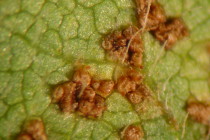
Soybean rust has been detected for the first time during the 2012 season in George County in southeastern, MS. Additional information regarding the specific find as well as management scenarios are included in the blog update. Stay tuned for additional information regarding the presence of soybean rust in the MS soybean crop on the blog, at www.sbrusa.net, and through the free telephone hotline (1-866-641-1847) that provides information regarding the presence of soybean rust in AR, LA, and MS and is sponsored by the Mississippi Soybean Promotion Board.
This is video update of the current disease situation in rice. Please click on the following link to watch.
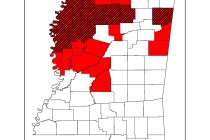
For the second year in a row bacterial blight of cotton has been observed on numerous acres in the MS production system. Compared to 2011, twice as many counties have been observed to contain infected plant material.
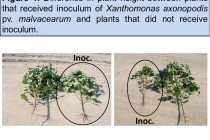
Inoculation trials were conducted during the 2011 season to determine the response of several popular cotton varieties to the bacterial blight organism. The attached blog post is a poster that was presented at the 2012 Beltwide Cotton Conferences that were held in Orlando, FL in January 2012.
Discusses the life cycle, management and identification of white mold or southern stem rot of peanut caused by Sclerotium rolfsii. It includes a section on how to distinguish it from a white mold look-alike. Southern stem rot or white mold
Root-knot nematode damaged cotton fields have been observed in at least two fields this season. With the loss of Temik, farmers have had to rely on alternative methods to manage high nematode populations.
Rice Acreage Report
USDA released their final planting intensions report today. Mississippi is still reported as having 135,000 acres of long grain rice. Estimated long grain acres in other states are estimated as follows: Arkansas 1,140,000 acres, California 5,000 acres, Louisiana 355,000 acres, Missouri 195,000 acres, and Texas 110,000. The total long grain rice acres in 2012 are estimated at 1,940,000 acres. That is an increase of 146,000 acres or 8% from 2011. Also, this acreage report was 4% higher than the March planting intentions report. This latest acreage report coupled with sluggish export sales has bearish implications on the rice market.

© 2023 Copyright Mississippi Crops. All Rights reserved.
