Cotton Planting Progress
Cotton planting began during the last few days in April in most areas of the state and really kicked into high gear beginning May 4. Growers have covered as much or more ground in one week this year than in
According to the National Agricultural Statistics Service in Mississippi, there were 1.8 days suitable for fieldwork for the week ending Sunday, April 19, 2015. Topsoil moisture supplies were 0 percent very short, 1 percent short, 37 percent adequate, and 62
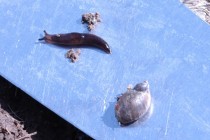
I have recently received a few call about slugs in corn and soybeans. I suspect this will increase when more crops emerge in the Hill region of the state as well. Slug problems usually start on corn first, then move to soybeans, then cotton in our area. This is only because we typically plant in this order. Slugs have been a sporadic problem in MS row crops over the years with increased occurrence since 2004. This has been exclusively a no-till or reduced till problem, particularly no-till behind a grass crop like corn or grain sorghum. Cool wet years are particularly favorable for slug problems to develop.
Mississippi State University will be hosting 5 scout schools this year. We have transitioned over the years to make these trainings much more diverse than insect pest alone. This year we will be including insects, disease, fertility, weed identification, and herbicide systems. There will be numerous hands on displays of insects, weeds, nutrient deficiencies in all major row crops, and fertilizer characteristics. CEU’s Provided: Nutrient Management = 1.5, Integrated Pest Management = 3, Crop Management = 1
There are a multitude of 2,4-D and dicamba formulations labeled for application to agricultural fields.
The tarnished plant bug is the most important insect pest of cotton in the Mississippi Delta. Management with insecticides has become difficult in recent years and more tools are needed to economically manage this pest. Although it is early March and we are getting pair of unusual winter storms in the Delta, it is not too early to start making a plan for managing tarnished plant bugs in cotton. We have done a lot of research over the last several years with the goal of making tarnished plant bug management more economical for producers without sacrificing yield. See the attached document for more details on the best management practices listed below.
Farmers attending the Mid-South Farm and Gin Show, February 27, in Memphis, will want to attend the Mid-South Ag Forum, scheduled for 1:30 p.m. on the Mezzanine Level of the Cook Convention Center. This special seminar features information on successful
“Pipe Planner is a free, user-friendly, web based application designed to help farmers create the most efficient poly tube irrigation system for their crops,”says Chris DeClerk of Delta Plastics. To assist Mississippi growers in the implementation of Pipe Planner, Lee
Final data for the 2014 Mississippi State University on-farm cotton variety trials can be accessed by clicking on the link below. Glyphosate-tolerant variety trials were conducted at 17 locations in 2014 and data are presented in the following manner: all
Find attached the agenda for the 42nd Annual Delta Ag Expo to be held in Cleveland, MS on Wednesday, January 21 and Thursday, January 22, 2015. We hope to see you in attendance at the Bolivar County Ag Expo Center.
Find below All data from the 2014 Small Plot Cotton Official Variety Trial (OVT). During 2014, small plot cotton variety trials were conducted near the following locations; Brooksville, Clarksdale, Itta Bena, Senatobia, Starkville, Stoneville, Tunica, and Verona. The Cotton OVT
Earlier this year the Mississippi State Chemical Laboratory lowered the fee for poultry litter analysis. Nutrient content of litter used for fertilizer varies up to 60%. Crop producers should have a recent analysis of litter so appropriate land application rates
The 2014 Row Crop Short Course will be held at the Bost Extension Center on the campus of Mississippi State University on December 1-3, 2014. Attendance is free of charge if you pre-register. Pre-registration is available until November 26. Registration
We received a phone call this morning from a Delta grower requesting assistance with his flow meter readings. Before the weather turns wet and cold, he had decided to collect the data from his well’s flow meters for reporting by
Monday’s Crop Production and World Agricultural Supply and Demand Estimates reports from USDA reversed last month’s changes and increased the expected size of the U.S. crop. Total U.S. production is forecast at 16.4 million bales, up 140,000 from October. The national yield was raised
The 2014 Row Crop Short Course will be held at the Bost Extension Center on the campus of Mississippi State University on December 1-3, 2014. Attendance is free of charge if you pre-register. Pre-registration is available until November 26. Registration
Boll rot appeared to be a common occurrence in numerous cotton fields at the end of the 2014 season. However, not all boll rot can be attributed to bacterial blight, especially in situations where the disease was not observed prior to harvest. Secondary fungal infection can ultimately obscure the observable boll symptoms associated with bacterial blight. Keep this in mind when scouting fields at the end of the season as bacterial blight boll lesions can oftentimes be obscured by secondary fungal invaders.
On behalf of the Mississippi State University Extension Service, we would like to cordially invite you to attend the 2014 Row Crop Short Course to be held at the Bost Extension Center on the campus of Mississippi State University from
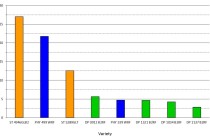
The USDA released their 2014 Cotton Varieties Planted Report on September 12, 2014. Stoneville 4946 GLB2 was the top planted variety in Mississippi this year followed by Phytogen 499 WRF and ST 5289 GLT. The entire report may be accessed
Defoliation season is upon us and as such, the 2014 Mid-South Defoliation Guide has been updated and is ready for use. Those who have worked with cotton fully understand the challenges associated with defoliation. Further compounding an already difficult task
We have had numerous calls over the last couple weeks about small, 2-5 day old larvae, under bloom tags in Bt cotton that is near, at, or beyond cutout. All of the research done to this point suggests that cotton is safe from bollworm damage when it reaches node above white flower 5 plus 300 heat units.
As we approach the end of August, terminating cotton irrigation is on the mind of many folks. In cotton, we recommend terminating furrow irrigation at first cracked boll. If you anticipate bolls opening in the immediate future and have been
Over the last 7 days we have had numerous reports of high bollworm numbers in some BollGard II, TwinLink, and WideStrike fields in the Mississippi Delta. We have seen fields in the past that reach treatable levels but some reports are much higher than we have seen in recent years. At this time there does not appear to be any specific varieties that are adversely affected more than others. It appears to be a function of high pressure in isolated areas at this time.
The last effective bloom date is the last date that a white flower will accumulate enough heat units to mature into a harvestable boll. Generally speaking it takes 850 heat units for a white flower to mature into a harvestable
This week we encountered another issue with a surge valve. After irrigating with a surge valve the producer noted that neither the 6” nor 12” sensors responded to the irrigation. When investigating the problem it appeared that the grower had